Between 22 August and 19 November, my studio ran about $3,050 worth of AI work. I paid a fraction of that. The rest was covered by someone else, and almost no cultural institution I know of could tell you what its own number is.
That is the problem this essay is about. Museums, libraries and community archives are starting to run real work through AI tools, and most of them are doing it without a price tag. So I went back through 90 days of our logs and priced every step at the published rate. What follows is that number, what each finished piece cost, who is paying the difference, and why I think institutions should start measuring now, while someone else is still covering most of the bill.
01The full price
Radical Imagination is a small cultural technology studio in Queens. We use AI agents to build archives people can explore, check every caption against its source, and turn public data into something a person can read on the sidewalk. An agent is an AI that works through a task in many steps: reading files, running checks, writing code.
From 22 August to 19 November 2026, our agent work came to about $3,050 at list price. Most of that is measured to the request. From 8 October on, every session's log survives, and those six weeks alone came to $2,743. For the seven weeks before that, the detailed logs are gone, so we estimated from how many prompts we typed and what a prompt cost once we could measure it. That estimate is about $309, somewhere between $236 and $367.
The shape matters more than the total. Through August and September we used agents lightly, rarely more than $80 in a week. In October we started building everything this way, and the weekly bill climbed past $700. Ninety percent of the 90-day cost landed in the last six weeks.
The bill, week by week
List-price cost of Radical Imagination's agent work, by week. The tallest week is $720.
By the clock, it is about 60 cents for every minute the agent works, roughly $36 an hour, and that rate held steady from project to project. AI work is not cheap.
02What each piece cost
We matched every request in the measured six weeks to the project folder the agent was working in, which gives a rough price for each piece we made.
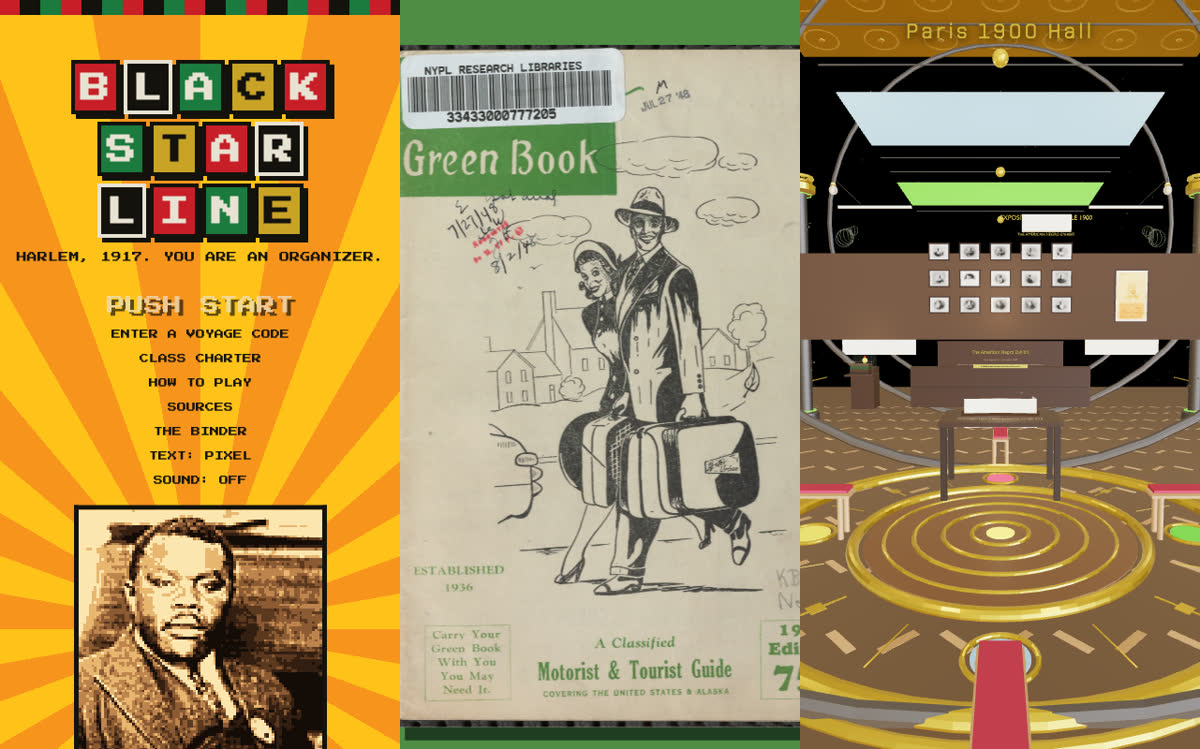
A 3D night drive through the 1948 Green Book, with stops built from the guide's own pages, National Register photographs and a to-scale 1947 Ford, took two weeks and about $133. A five-session course on Marcus Garvey in the media cost about $155 over six weeks. The Black Star Line game cost about $173. Six weeks of corpus work, an exam and fixes on the Garvey archive came to about $146. A month of updates to our VR Cave Gallery, a headset exhibit, came to about $63. A to-scale 3D replica of a Pathé 78 record and its phonograph cost about $19.
And one independent fact-check? In a controlled test, where the reviewer checked a single prepared card with planted errors, it cost 30 cents. Real reviews run on longer, messier material: across 58 production validator runs, the median is $1.60.
The showcase
The work itself, with what its agent work cost at list price.
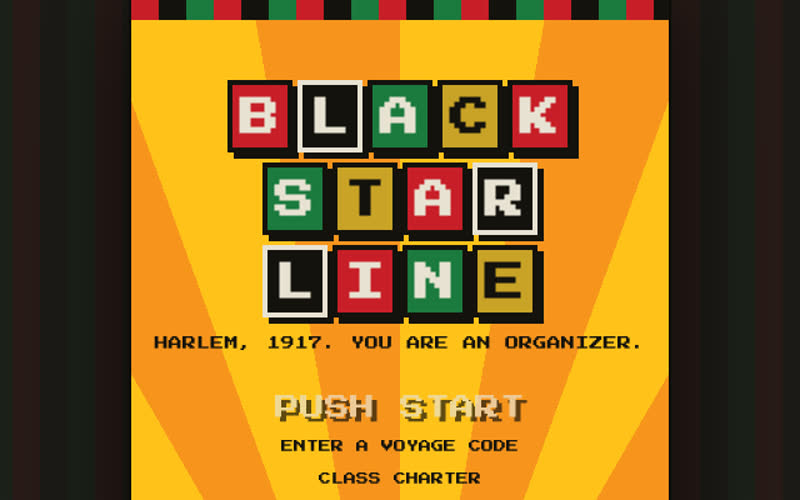 Black Star Line$173
A game: run a UNIA division in Harlem, 1917 to 1923, with 78 sourced history cards.
See it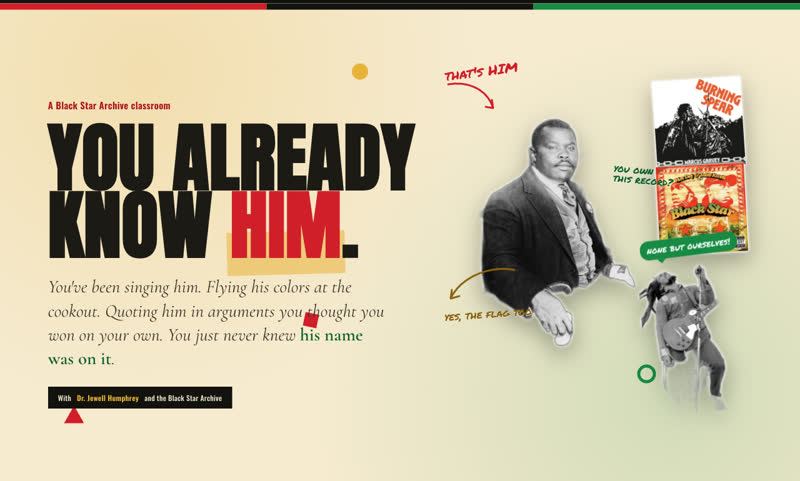 Garvey in the media$155
A five-session course with Dr. Jewell Humphrey. Black Star Archive × Radical Imagination.
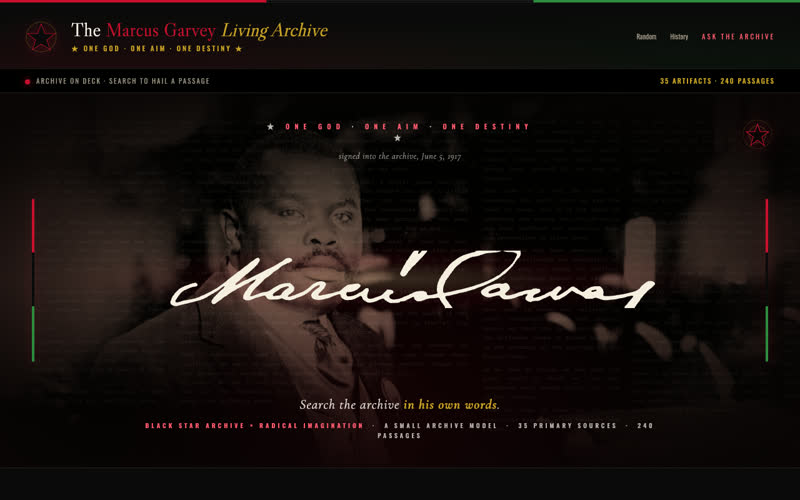 The Garvey archive$146
Search checked passages in his own words. Black Star Archive × Radical Imagination.
See it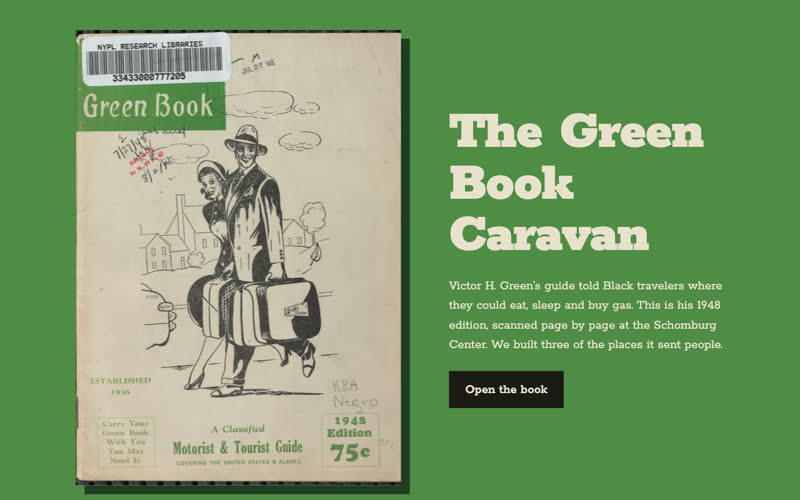 The Green Book Caravan$133
A 3D night drive through the 1948 guide, built in two weeks.
See it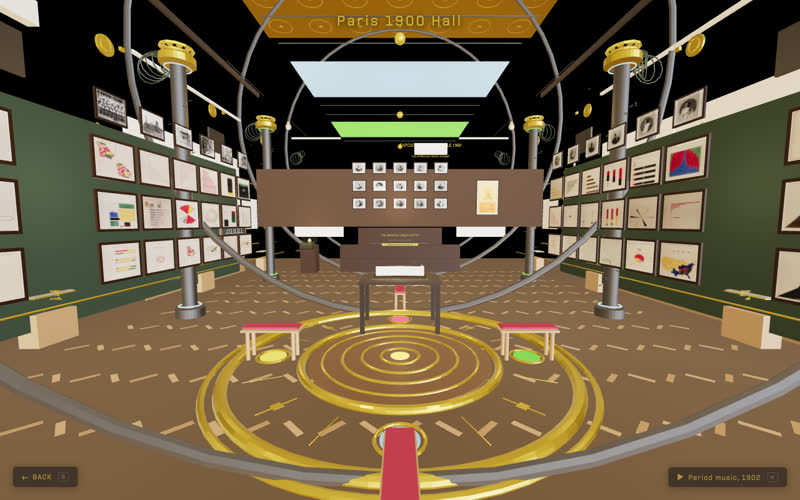 The VR Cave Gallery$63
The Paris 1900 Hall, rebuilt around Du Bois’s plates.
See it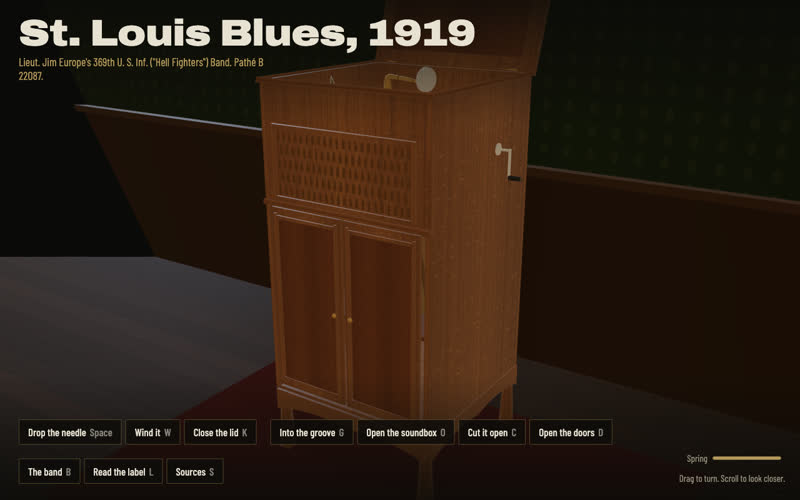 The 78$19
A to-scale replica of a 1919 Pathé record and its phonograph. Not public yet.
What each piece cost
List-price cost of agent work, 8 October to 19 November 2026, matched by project folder.
None of these is the whole cost of a piece. The VR gallery and the Garvey archive were first built in the spring, before these logs begin, and a person did the research, the judgment and the final call on every one. But each number is real, and each is smaller than most people guess.
03Where the money goes
The first surprise was that long sessions cost more per step. Every new message makes the agent re-read everything that came before it, so the meter runs faster the longer you talk. In short sessions, each turn cost about 98 cents. Past ten turns, each cost about $2.38.
$2.38the cost of one turn once a session passes ten turns, against 98 cents in a short one.
The second was how lopsided the bill was. In our first 16 logged sessions, three day-long sessions, each running roughly 200 turns or more, made up two thirds of the total. Most of the money went to a handful of marathons, not to the everyday work.
The third was where the bargain sits. Our independent reviewer looks for wrong dates, misattributed quotes and missing credits before anything goes public, and in a test with planted errors and hidden answer keys it caught most of them, more per dollar than the same model with no setup. How the work is shaped moves the bill as much as which model does it.
04Same work, other labs
Then I asked what the same six weeks would have cost somewhere else. I took every token from the measured period and priced it at each lab's published rates. Ninety-eight percent of those tokens were the agent re-reading context it had already seen, which every lab sells at a discount called caching. Those re-reads were 55 percent of our bill, so the line on the price sheet that matters most is one almost nobody advertises: the price of a cached read.
98%of the tokens were the agent re-reading what it had already seen. Those re-reads were 55 percent of the bill.
At Anthropic's rates, the six weeks came to $2,743. At the standard price Google lists for Gemini 4 Carbon from 1 December, about $2,300. Gemini 3.1 Pro looks cheaper on its headline rates, but once a prompt passes 200,000 tokens Google charges roughly double for input and caching, and output tokens cost about 1.5 times more. Sixty-three percent of our requests passed that line, because an agent carries its whole working context into every step. Priced request by request, the six weeks come to about $3,460 on Gemini 3.1 Pro.
OpenAI's flagship, GPT-6.2 Astra, charges 40 cents per million cached reads, twice the others, and the six weeks would come to at least $4,600. Its everyday model, GPT-6.2 Sol, would come to at least $1,150. "At least," because OpenAI's published rates cover prompts under 272,000 tokens, half our requests ran longer, and it lists no price for those.
Same six weeks, five models
Our measured tokens, repriced request by request at each lab's published rates.
This is not a ranking. Each lab counts tokens its own way, so the same text is a different number of tokens on each. The models are not interchangeable on quality, and we did not run our work on the others. Google also charges by the hour to store cached context, which this leaves out. What it shows is where to look first: when you compare AI vendors for agent work, read the price of a cached read and the price of a long prompt before the headline price.
05The gap
I did not pay $3,050. I paid a flat monthly subscription. Claude's plans run $20 a month for Pro, $100 for Max and $200 for Ultra. Even at the top tier, those 90 days come to about $600 of subscription, about a fifth of the list price. That leaves about $2,450 between what the work is listed at and what the top plan charges. (The $600 is what a $200-a-month plan costs over 90 days, not a statement of what Radical Imagination paid.)
$2,450between the list price of 90 days of work and what the top plan charges for the same 90 days.
And it isn't one company. All three big labs sell the same shelf. Claude runs $20, $100 and $200 a month. Google AI Plus is $4.99, Google AI Pro is $19.99, and Google AI Ultra starts at $99.99 with a $199.99 tier. ChatGPT Plus is $20, and ChatGPT Pro comes at $100, $200 and $500. Priced at each lab's own published rates, the same six weeks of our work would cost anywhere from at least $1,150 to at least $4,600 depending on the model, yet the monthly plans land on the same numbers. That is a price set by competition, not by cost.
Same shelf, three stores
Monthly plan prices from each company, November 2026.
| Company | Plans, per month |
|---|---|
| Anthropic, Claude | Pro $20; Max $100; Ultra $200 |
| Google AI | Plus $4.99; Pro $19.99; Ultra $99.99 and $199.99 |
| OpenAI, ChatGPT | Plus $20; Pro $100, $200 and $500 |
We are not an outlier. This week a developer posted his all-time Claude Code totals, about ten months of use: 16.3 billion tokens on a plan he said costs $200 a year, which he figured "would cost around $100,000" at the per-use rate. His screenshot breaks the tokens down, so I priced them the way we price ours. Of his 16.3 billion tokens, 15.9 billion, about 98 percent, were cached re-reads, the same share as in our logs. Assuming all of it ran on Opus 5.5, the model his screenshot lists as his favorite, his list price comes to about $6,500 to $7,400. A flat rate per token, which is what $100,000 over 16.3 billion tokens works out to, puts nearly all of the cost on the cached reads, and cached reads list at a twentieth of the price of fresh input. At list rates his use still comes to about thirty times what he paid.
Someone is covering the difference, or the list price carries a margin the plan gives back. Either way, right now the gap is being absorbed by the AI companies, competing for users, and the investors behind them. Nobody has promised it lasts.
06The bill comes due
This week the arrangement gained a new party. On 18 November, Anthropic, the company behind the model we use, priced its IPO at $83 a share. When the offering closed on 20 November, with the underwriters buying their full allotment of extra shares, it came to about 1.13 billion shares and $93.5 billion, one of the largest share sales on record. A public company answers to its shareholders every quarter.
One of those shareholders is a public pension. North Carolina invested $250 million in Anthropic about eight months before the listing, and on 19 November the state treasurer's office posted that the stake was now worth $950 million, a "big win for N.C. teachers, state employees, retirees & taxpayers." That Thursday the stock opened at $111.50 and closed at $97.17. On Friday, as worries about the AI trade pulled tech stocks down, it fell during the day to within five cents of the $83 offer price and closed down 8.5 to 9 percent, depending on the report.
Going public
Anthropic's IPO, priced 18 November and closed 20 November 2026 (Anthropic), and its amended S-1, filed 2 November 2026.
What those shareholders are underwriting is enormous. In its filing to go public, Anthropic reported "an aggregate committed spend of approximately $895.4 billion, substantially all of which is related to compute and infrastructure," about $447.5 billion of it expected before the end of 2030. Some of those contracts, the filing says, "obligate us to pay for resources regardless of actual utilization." Its revenue, meanwhile, "is primarily consumption-based, and much of it is not subject to long-term contractual commitments." The filing draws the conclusion itself: "We must grow our customer base and expand revenue rapidly in order to generate the cash flows necessary to satisfy these commitments."
None of this means the price goes up tomorrow. Competition, cheaper chips and open models all push the other way; the same filing warns that open models "could exert pricing pressure on our offerings." But the companies that set the price now have a schedule of bills and a share price to defend, and a plan priced at a fifth of what the work costs is exactly the kind of gap investors will ask about.
A new paper from Google DeepMind researchers models what rides on that price. In "Organizing Intelligence," dated 29 October, Alex Imas, Andrew Koh and Shane Legg treat human expertise as fixed in supply while AI capabilities "can be copied at the cost of compute." In their model, once AI agents coordinate well enough, a market can tip toward "large, concentrated AI-heavy firms." The authors stress that these are scenarios from a theoretical model, "not empirical forecasts," and the paper uses no empirical data. In the model, compute is rented at a price, and that price is what each copy of AI expertise costs.
Measure while the discount lasts, because the people who set it now have to answer for it.
07Why move now
The cheap window is a chance to measure. Today an institution can run real work through these tools for a few hundred dollars a month and learn what a fact-check, a lesson draft or a catalog cleanup actually costs. If prices move toward full cost, the institutions that measured will know which work is worth paying for, and the ones that didn't will find out from the invoice.
The gap is already opening, and it is hard to see. Well-funded universities are buying in at scale. The University of Texas at Austin committed more than $4.2 million over two years to ChatGPT and Claude education licenses, and the public knows that because The Daily Texan reported the contracts in October after an open records request. Even there, what became public is the price of a contract, not the cost of the work: the usage figures reported were account counts, not costs per task.
I could not find a museum or university that publishes what its AI work costs per task, and the research says that is the norm. A review of 27 generative AI systems deployed in museums and galleries, published in August, found that the record "reports what these systems did and not what running them required." A UNESCO and ICOM survey of 403 museums in 90 countries, published in September, found that 57 percent already use AI, but 67 percent put no money toward it and only 4 percent have a budget line for it.
The survey says
403 museums in 90 countries, UNESCO and ICOM, September 2026.
If the best-resourced institutions publish contracts and not costs, smaller ones have nothing to measure against. Community archives, small arts groups and workforce nonprofits are the places most at risk of being priced out later, and the places that most need to tell their own history.
Knowing the price is also protection. If you don't know what agent work costs, you can't tell a fair quote from a markup. A vendor can sell a "custom AI solution" for tens of thousands of dollars that runs on a $100 subscription. The real number is how you tell the difference.
08The objection
The fair objection is that this reads like an advertisement for one company's subscription. I priced one vendor because it is the one we use, and its logs are the ones I can read. The point is the method: read your own logs, price them at the published rate, and divide by what you actually delivered. That works for any vendor, and an institution should run it on more than one before it signs anything.
The other objection is that prices only fall, so why worry. Maybe they will. A measured cost per deliverable still tells you which work is worth doing at any price, and it is the number a funder will ask for either way.
09What I'd tell an institution
- Treat a top-tier plan as research. All three labs sell one for $100 to $200 a month. For that, one staff member can run real tasks and log what each one costs. That is cheaper than a conference registration, and more useful.
- Price the outcome, not the token. "A dollar or two per caption check" or "$133 for an immersive exhibit draft" is a number a program officer can approve.
- Give agents bounded jobs. Review, fact-checking, data cleanup and first drafts are cheap and repeatable. Keep day-long open-ended sessions rare.
- Keep sessions short. Start fresh for each task. In our logs, a turn past the tenth cost more than twice a turn in a short session.
- Keep your logs. Our detailed logs only reach back to 8 October; everything before that we had to estimate. Turn on whatever usage logging your tools offer on day one.
- Share what you learn. Libraries learned to share catalogs. Institutions can share costs, checks and tools the same way.
- Write compute into the grant, as its own line, backed by a measured cost per deliverable. Most arts budgets have no line for it yet; data is how that changes.
10The price on the tag
The price of AI work for a cultural institution is knowable today, for the cost of a subscription and a log. Ours came to about $3,050 for 90 days, about $133 for an exhibit draft, and about a dollar and a half for a fact-check before anything goes public. Those numbers will change. The institutions that wrote theirs down this year will be the ones who can tell, when the bill changes, which work was worth it.
How we measured, and sources
Claude Code keeps a log of every session: tokens read and written, cached context, tool calls and timestamps. A short script (evals/cost_baseline.py) reads every Radical Imagination session and its helper agents, counts each request once, and prices it from a dated price table, the same one Ponytail uses (Anthropic's pricing page, checked 17 October 2026). Ponytail, an open-source tool by Dietrich Gebert that logs cost for every task we run, and Claude Code's own cost report both agreed with our numbers on the runs we compared.
The 90-day figure has two parts. From 8 October to 19 November it is measured: 20,390 calls to the model, $2,743. Before 8 October, Claude Code had already cleared the detailed logs, but our memory tool, claude-mem, kept a record of every prompt we typed back to April. Across the measured weeks, each typed prompt cost $1.54 on average, between $1.18 and $1.83 in any given week. We multiplied the 201 prompts from 22 August to 7 October by that average, and by the low and high weeks for the range.
The per-piece prices assign each request to the last project folder the agent touched in that session. About 8 percent of the cost touched no project folder and is left unassigned. Treat each price as approximate. The Green Book Caravan counts its drive, specs, archive and 1947 Ford folders; the VR Cave Gallery counts its project and archive folders; the Garvey archive counts the archive and the living-archive project; the Black Star Line counts the game project and its experiment folder.
The 30-cent fact-check is the cost per run in a controlled A/B test (evals/validator/ab-2026-11-14-metrics.json), in which the reviewer checked one prepared card with planted errors. It is a test figure, not a production one. In production the median run cost $1.60 (the middle half of runs cost $0.57 to $2.71), across 58 finished spark-validator runs in Claude Code's helper-agent logs, computed 21 Nov 2026 with evals/validator_run_cost.py (data in evals/validator_run_cost.json).
We also tested whether one free tool changes the bill. Across 18 small coding runs, Ponytail on versus off, it wrote about 28 percent less code with the same pass rate. On the tasks both versions solved, the cost was about the same. A tool can make the work leaner without making it cheaper, which is why you measure before you believe a savings claim.
The cross-lab comparison reprices the measured tokens by type: 0.1 million uncached input, 112 million written to cache, 7,445 million read from cache and 18.3 million output. Cache writes are priced as ordinary input where a lab has no separate write price. Gemini 3.1 Pro is priced per request by prompt size.
Caveats: list-price equivalents, not what I paid. One studio whose work runs long and reads a lot. Seven of the thirteen weeks are estimated, not measured. A baseline, not a forecast. I'd like to compare notes with institutions measuring their own.
The series name builds on Elizabeth Yakel and Deborah Torres, "AI: Archival Intelligence and User Expertise," The American Archivist 66, no. 1 (2003).
- 90-day baseline and per-piece prices: evals/cost_baseline.py over Radical Imagination's Claude Code session logs (8 Oct to 19 Nov), plus prompt counts from claude-mem (22 Aug to 7 Oct). Run 19 Nov 2026.
- Per-minute rate, per-turn cost and the marathon share: Ponytail band log, summarized by evals/ponytail_ledger.py for Radical Imagination's 16 sessions, 8 Oct to 16 Nov: $2,665, 74.4 agent-hours, 60 cents a minute; 98 cents a turn in sessions of ten turns or fewer, $2.38 past ten; the three longest sessions (312, 230 and 199 turns) were 69 percent of the cost.
- Review test: evals/validator/ab-2026-11-14-metrics.json; specs/spark/2026-11-14-does-spark-help.md, sections 8a and 9.
- Ponytail on/off: evals/ponytail_ab/results.jsonl (18 runs, 16 Nov).
- Anthropic list prices: Ponytail's price table (platform.claude.com pricing, checked 2026-10-17). Opus 5.5: $4 per million input tokens, $20 output; Fable 5.1: $10 and $50.
- Gemini prices: Google's Gemini API pricing page (aistudio.google.com/docs/pricing), read 19 Nov 2026: Gemini 3.1 Pro Preview $2 input, $0.20 cached, $12 output up to 200k-token prompts, and $4, $0.40, $18 above; Gemini 4 Carbon $4, $0.20, $20 from 1 Dec 2026 (no long-prompt tier listed).
- OpenAI prices: OpenAI Business Pricing page (openai.com/business/pricing, API tab), captured 19 Nov 2026: GPT-6.2 Astra $8 input, $0.40 cached input, $40 output; GPT-6.2 Sol $2, $0.10, $10 (standard processing, context under 272K).
- Anthropic IPO: Ashley Capoot and Leslie Picker, "Anthropic IPO raises over $81 billion in largest offering on record, topping SpaceX," CNBC, 18 Nov 2026 (updated 19 Nov).
- First two days of trading: Ashley Capoot and Kai Nicol-Schwarz, "Anthropic falls nearly 9% in first full day of trading as tech stocks get shellacked," CNBC, 20 Nov 2026, cnbc.com/2026/11/20/anthropic-stock-ai-amd-nvidia.html (open $111.50 and close $97.17 on 19 Nov; down 8.5% on 20 Nov); MLQ.ai Newsroom, "Anthropic shares close down about 9% on day two after coming within 5 cents of their $83 IPO price," 20 Nov 2026, updated 6:08 PM EST, mlq.ai/news/anthropic-shares-fall-toward-their-83-ipo-price-on-day-two-as-the-greenshoe-lifts-the-raise-to-935-billion/ (intraday low $83.05; close $88.30, down 9.1%); Amilia Bon, "Anthropic ANT Stock Takes a Nose Dive, Crashing Near Its Listing Price as AI Bubble Fears Grow," Startup Fortune, 20 Nov 2026 ("after touching a low of $83.05," around midday). Read 20 Nov 2026.
- IPO close: Anthropic, "Anthropic announces closing of initial public offering, including full exercise of underwriters' option to purchase additional shares," anthropic.com/news/ipo-close, 20 Nov 2026: 1,127,000,000 shares at $83.00 including the full 147,000,000-share option; gross proceeds about $93.5 billion, about $91.6 billion to Anthropic. Pricing notice (anthropic.com/news/anthropic-prices-initial-public-offering, 18 Nov 2026): 980,000,000 shares at $83.00. Read 20 Nov 2026.
- North Carolina stake: NC Department of State Treasurer (@NCTreasurer) on X, 19 Nov 2026, x.com/NCTreasurer/status/2123533776647045364, quoted off the post; Joseph Ochoa, "Anthropic's public trading debut means a win for NC retirement fund, state treasurer says," WRAL, 20 Nov 2026, wral.com/news/local/anthropic-ipo-debut-means-win-nc-retirement-fund-treasurer-says-november-2026/. Screenshot of the post: research/archival-intelligence/sources/2026-11-20-nctreasurer-post.png. The $950 million is the treasurer's own figure; neither source gives the share price or date it is based on.
- Developer's token count: Vlad Mihalcea (@vlad_mihalcea) on X, about 20 Nov 2026, x.com/vlad_mihalcea/status/2123753559191617993, screenshot of his Claude Code stats: 487.4 thousand input, 88.6 million output, 15.9 billion cache read and 301.8 million cache write tokens. Repriced at Opus 5.5 list rates from evals/agent_metrics.py ($4 input, $20 output, $0.20 cache read, $5 or $8 cache write per million): $6,463 with 5-minute cache writes, $7,368 with 1-hour writes. Assumes all Opus 5.5, his "favorite model"; the screenshot does not split by model, and says "All time" (125 active days of 296). Screenshot: research/archival-intelligence/sources/2026-11-20-developer-token-stats.png.
- Economic model: Alex Imas, Andrew Koh and Shane Legg, "Organizing Intelligence," Google DeepMind, 29 Oct 2026, storage.googleapis.com/deepmind-media/papers/organizing-intelligence.pdf; quotes from the abstract and section 1. Theory only: the authors state its scenarios are not empirical forecasts, and that the paper gives their own views, not their institutions'.
- Anthropic commitments and quotes: Anthropic, PBC, Form S-1, Amendment No. 1, filed with the SEC on 2 Nov 2026 (risk factors and liquidity sections). Read from the filing PDF, 19 Nov 2026.
- University of Texas contracts: Naina Srivastava, "UT agreed to pay about $4.2 million for ChatGPT, Claude education services, contracts show," The Daily Texan, 29 Oct 2026.
- Museum survey: UNESCO and ICOM, Findings of the UNESCO-ICOM 2026 Global Survey on the Use of Artificial Intelligence in Museums, final report, 17 Sep 2026 (403 validated responses, 90 countries); key findings p. 1, budget printed p. 15.
- Museum review: Anna Małgorzata Kamińska, "When the Machine Speaks for the Collection: Deployed Generative AI in Museums and Art Galleries: A Scoping Review," Future Collect. Libr. Arch. Mus. 2026, 1, 3, 22 Aug 2026, doi.org/10.3390/fclam1010003.
- Google plan prices: gemini.google/subscriptions (AI Pro $19.99, Ultra from $99.99, $199.99 tier), checked 19 Nov 2026. Google AI Plus at $4.99 a month: TechRepublic and 9to5Google, June 2026 (price cut from $7.99). UNVERIFIED against Google's own page.
- OpenAI plan prices: openai.com/chatgpt/pricing and help.openai.com "About ChatGPT Pro tiers" (Plus $20; Pro $100, $200, $500), checked 19 Nov 2026.
- Claude plan prices: claude.com/pricing and support.claude.com "What is the Max plan?", checked 2026-11-19.
"A people's art is the genesis of their freedom."Claudia Jones, 1959