The Numbers
Black neighborhoods ran their own lottery. Most players lost, and a few of its bankers put the money into lodges, ballclubs and buildings, and backed a world champion. Five cities, told from the papers of the time, with the cost on the same page as the gift.
Scratch the cardsEach one pays out the newspaper it came fromA note on words: the clippings and quotes below keep the papers’ language as printed, including “Negro,” “colored” and “Scarface.” Those are the terms of the 1920s to 1950s sources, not ours.
South Jamaica
What we know
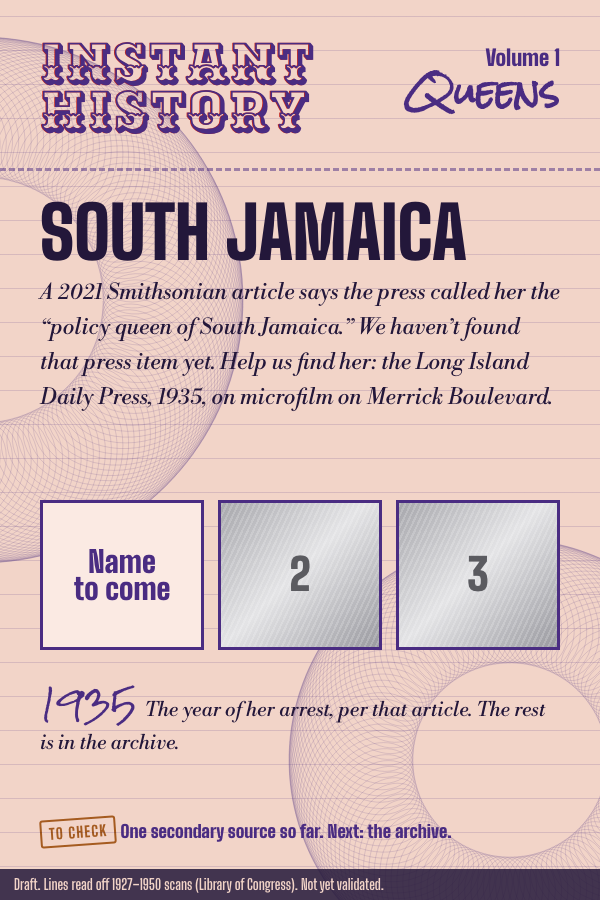
Very little. A 2021 Smithsonian article says the press called a woman in South Jamaica the policy queen of South Jamaica, Queens,
and that she employed five to ten collectors and several runners before her 1935 arrest.
We have not yet seen that press item, or any other, so we are leaving her name off until we have.
What we don’t, yet
The arrest itself, the charge, the outcome, and her own words. What players paid: not yet sourced. They should be on microfilm in the Long Island Daily Press at the Queens Library, on Merrick Boulevard.
TO CHECKOne secondary source so far: Sarah Durn, Smithsonian, 2021, which cites no source of its own. Help us find her: this volume starts in the archive.
Casper Holstein
What the money built
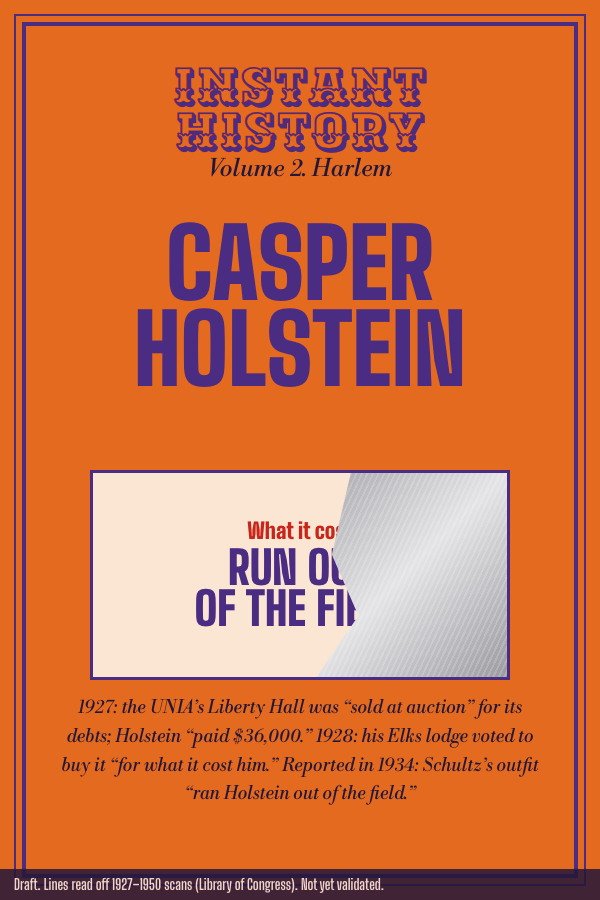
Liberty Hall was the UNIA’s, the headquarters of Garvey’s movement on West 138th Street. In January 1927 it was sold at auction
: it had been put on the auction block to satisfy two judgements amounting to more than $12,000.
Holstein, for several years … one of the largest contributors to the Garvey movement,
paid $36,000 and took over all outstanding mortgages,
saying he wanted to keep the hall under race ownership.
In January 1928 his Elks lodge voted to buy the former headquarters of the U N I.A.
from him. He had refused several offers to sell the property to white builders at a profit
and let the lodge have it for what it cost him.
He funded Opportunity magazine’s 1926 and 1927 literary contests, one thousand dollars
to each. After the 1928 hurricane he is said to have sent $5,000 cash and shipped $4,300 in timber to the Virgin Islands, his native home, for storm relief.
What it cost
Two readings of Liberty Hall both stand. Keeping it out of white brokers’ hands was real. So was the loss: a mass movement’s headquarters went on the auction block for its debts, and a banker’s money bought it.
What players paid, as a Washington paper reported it in 1934, relaying the writer Stoddart and reliable estimates from police
: Dutch Schultz’s outfit ran Holstein out of the field and now collects on an average of $100,000 a day from residents of Harlem … most of it money that never ‘pays off.’
The same page: Of 218 murders last year in the city, 50 were traced to the numbers racket.
By 9 March 1936 a St. Croix paper reported him convicted and in cell 136 in the Tombs Prison.
SOURCES DISAGREEOn when he was convicted: by March 1936 in the St. Croix paper, 1937 in later histories. The sentence is given as one year or three. We print neither.
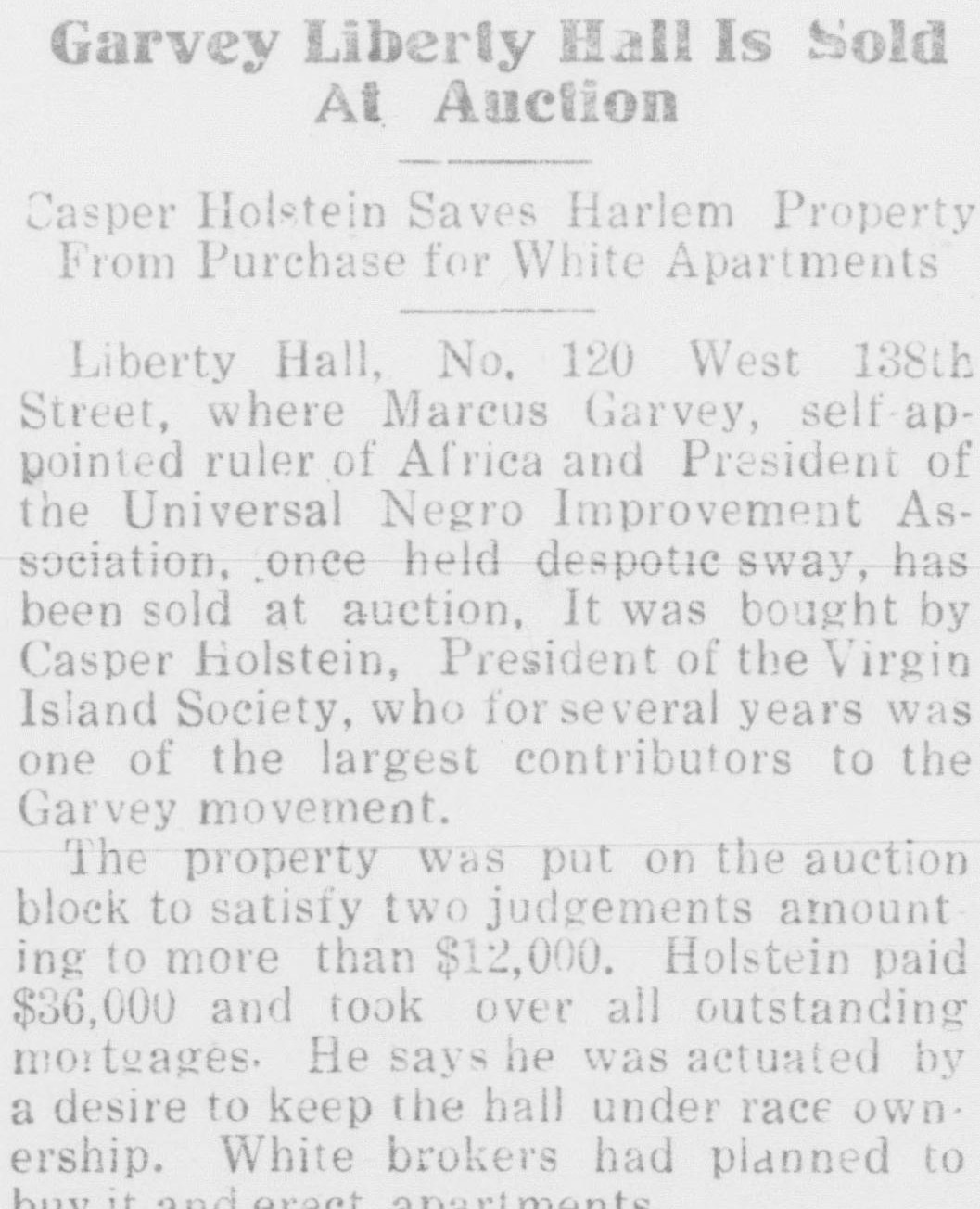 St. Croix Avis, 20 Jan 1927
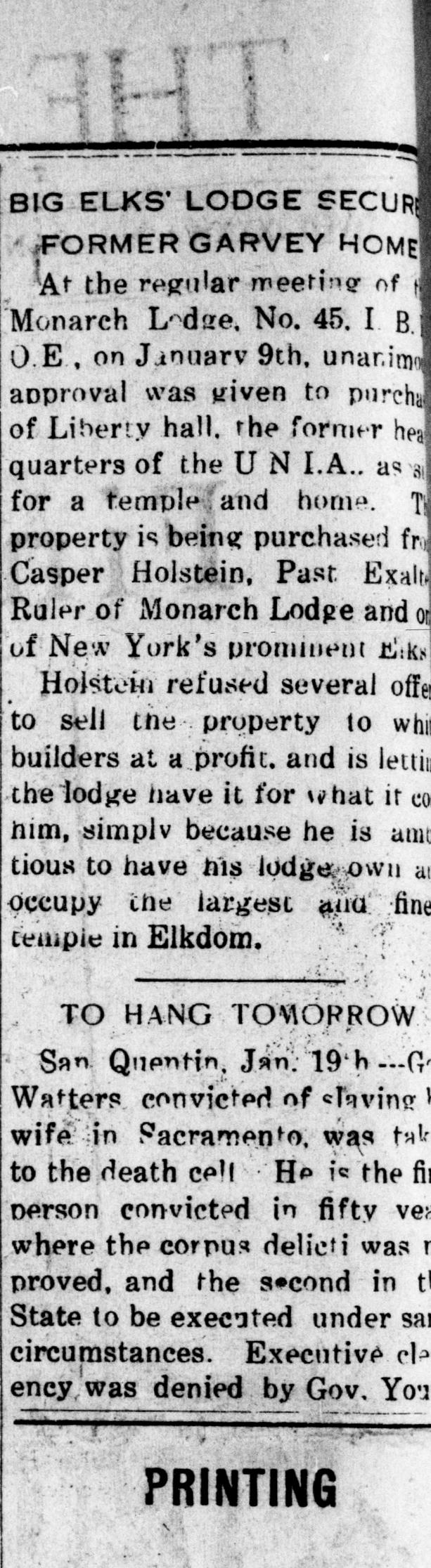 Western Outlook, 21 Jan 1928
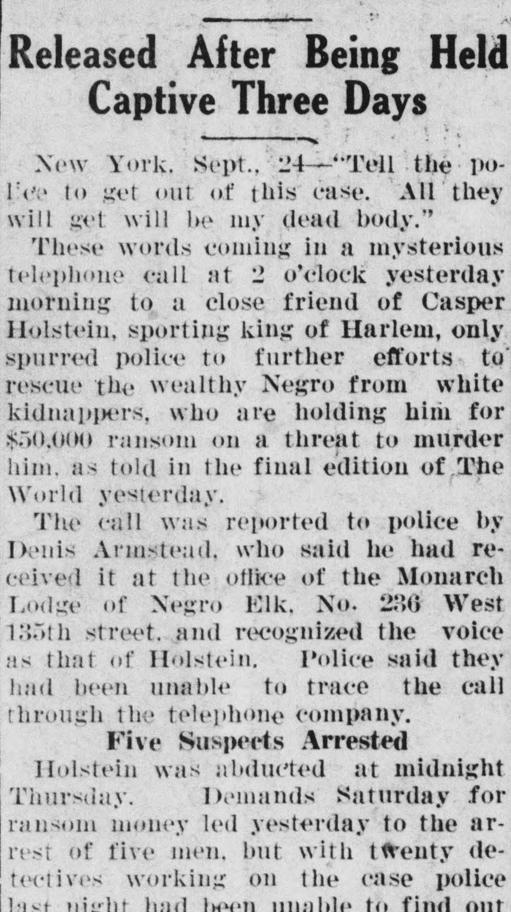 Savannah Tribune, 27 Sep 1928
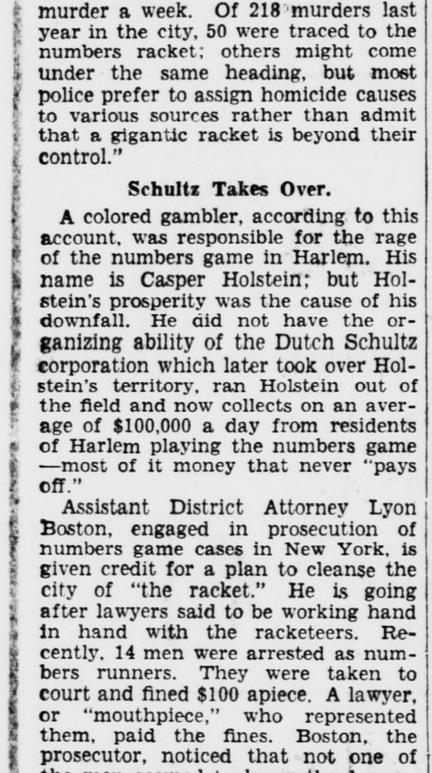 Evening Star, 14 Dec 1934
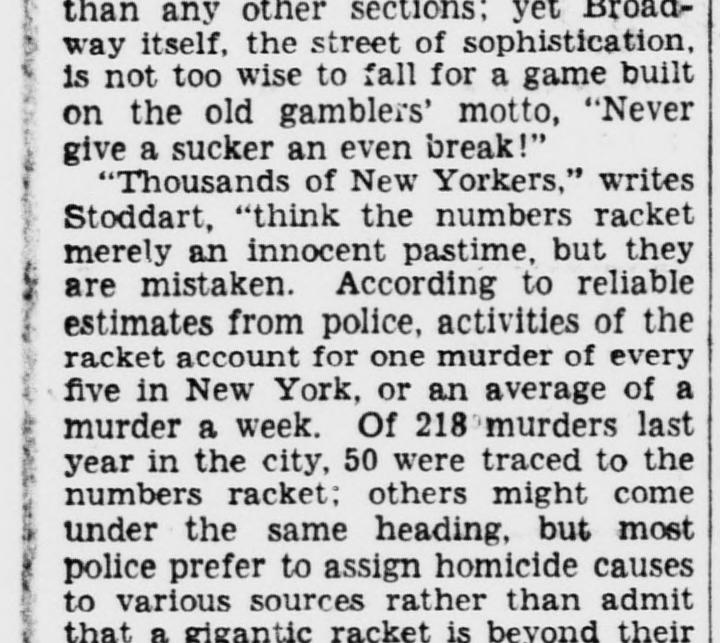 Evening Star, 14 Dec 1934, police estimates
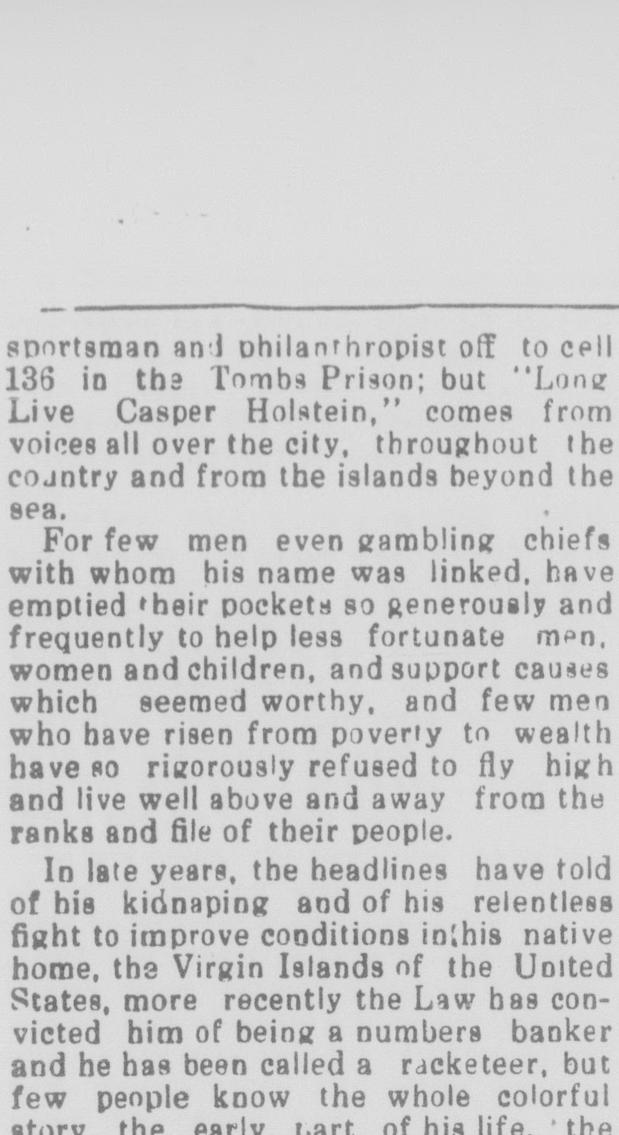 St. Croix Avis, 9 Mar 1936
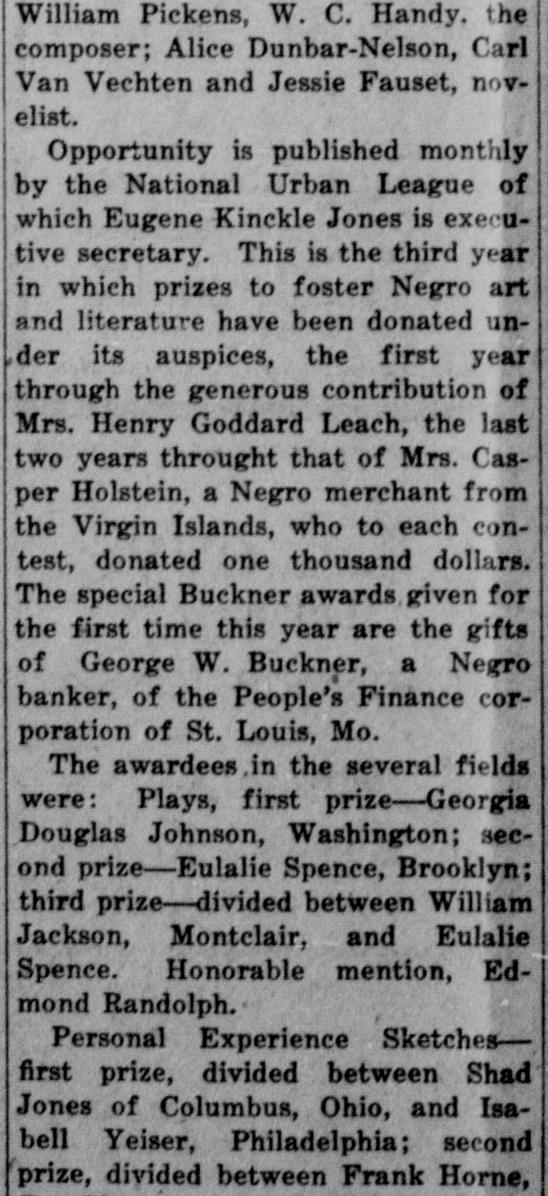 The Monitor, 20 May 1927 (prints “Mrs. [sic] Casper Holstein”)
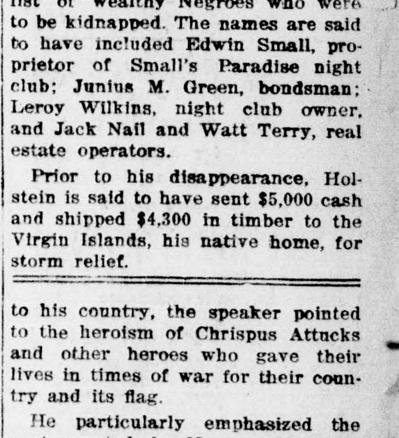 Gary American, 28 Sep 1928
Period papers, period terms: quoted as printed. The 1927 St. Croix item calls Garvey self-appointed ruler of Africa
; that hostile frame is the paper’s, not ours.
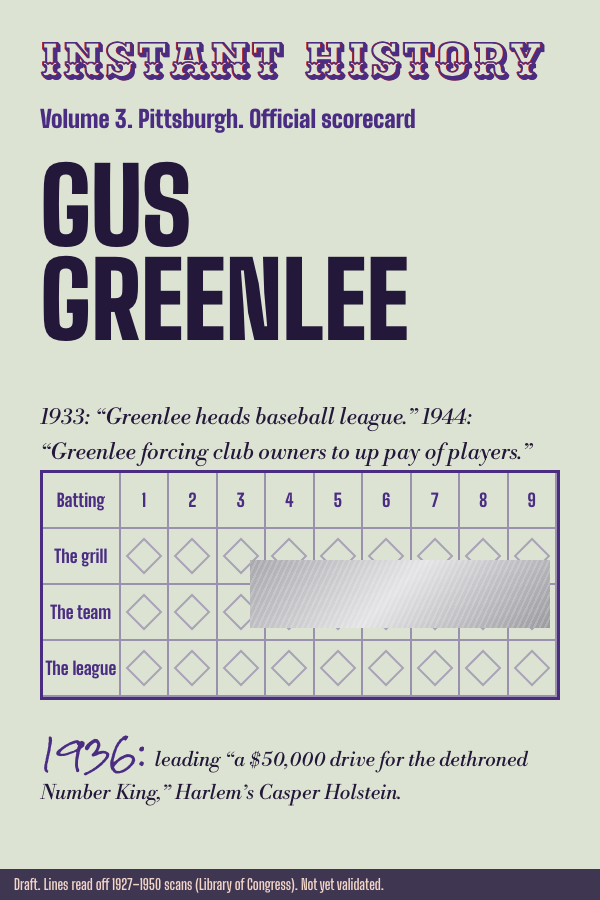
Gus Greenlee
What the money built
The Crawfords, and Greenlee Field, the park Greenlee built with partners. In 1933 the papers ran Greenlee heads baseball league.
In 1944, Greenlee forcing club owners to up pay of players.
In 1945 he wrote under his own name that his new U.S. League, with eight clubs operating out of eight major league parks,
would be the surest and most effective way for Negroes to break into the Major Leagues.
What it cost
What players paid: by baseball historian Brian McKenna’s account (SABR, a secondary source), a penny bet on 999-to-1 odds paid about $5 or $6. By our arithmetic, the bank kept 40 to 50 cents of every dollar. His arrests and tax case still need their own papers.
TO CHECKWho owned the park: one historian (Strecker, SABR, secondary) says Greenlee held about a quarter of the company and that white partners Joe Tito and Dr. Joseph Thoms controlled staffing. Not yet read in a period paper.
 Washington Tribune, 10 Feb 1933
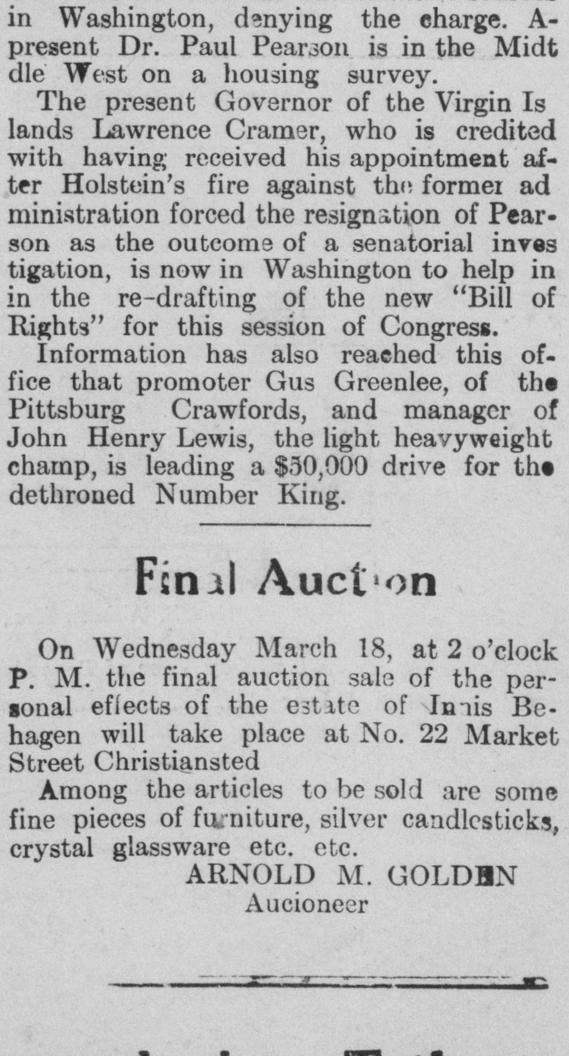 St. Croix Tribune, 16 Mar 1936
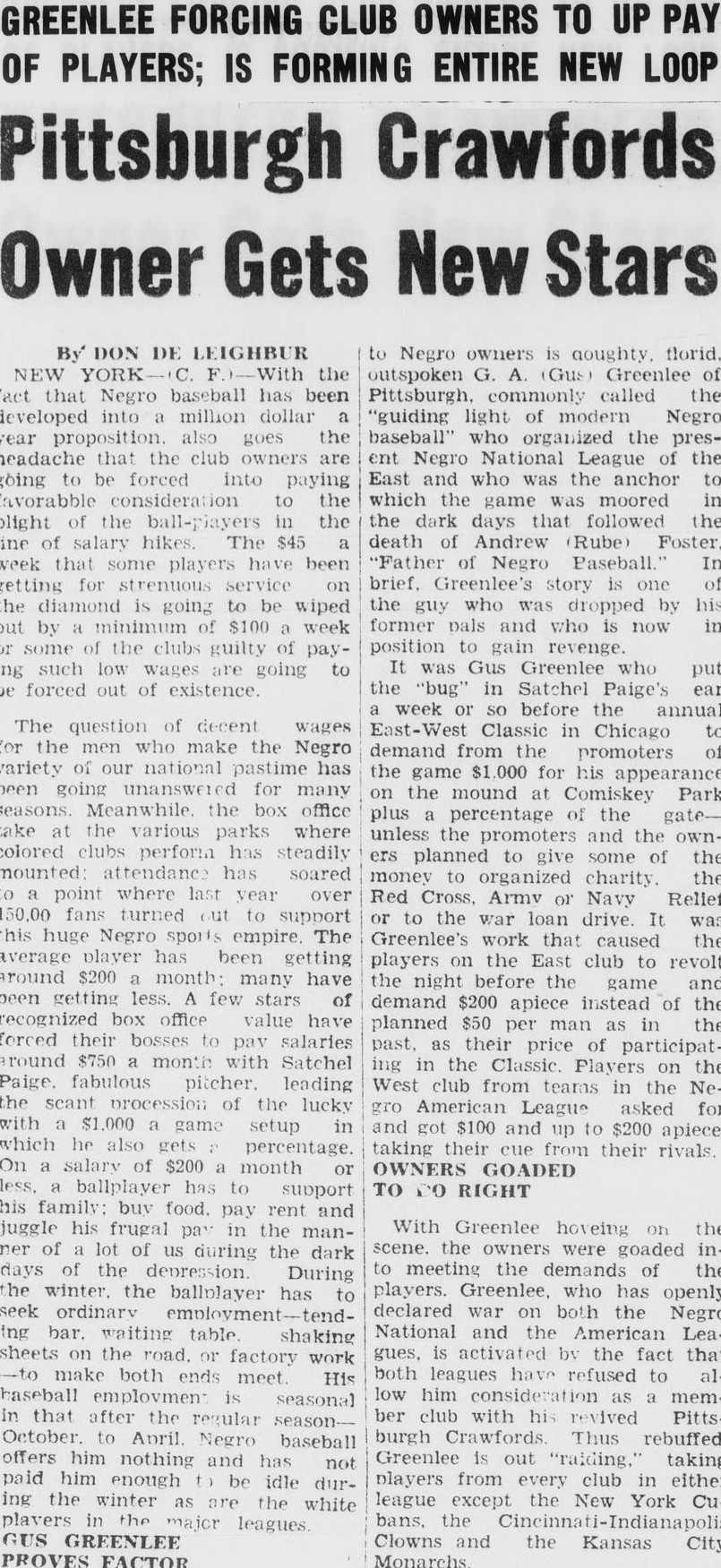 Atlanta Daily World, 8 Sep 1944
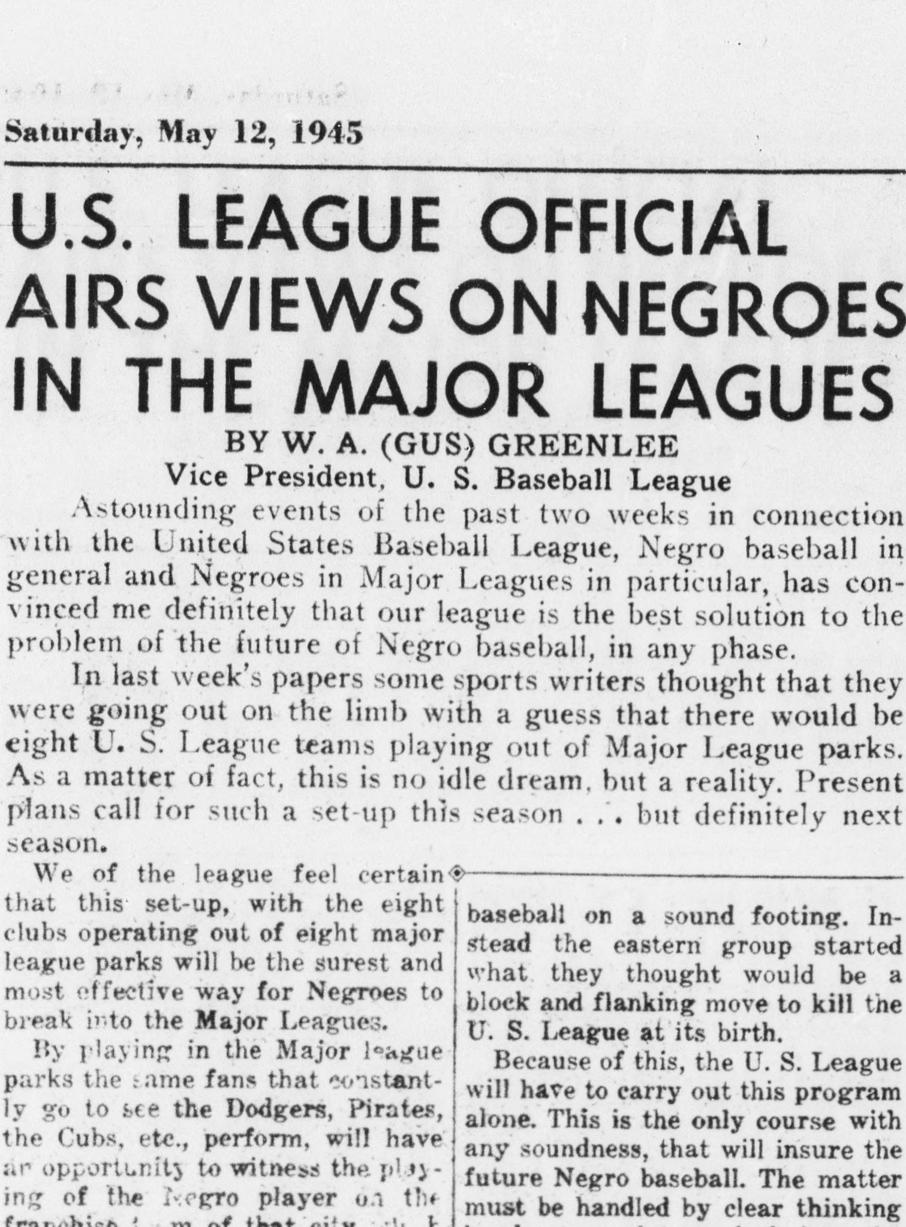 Cleveland Gazette, 12 May 1945
Period papers, period terms: quoted as printed.
In March 1936 Greenlee led a $50,000 drive for the dethroned Number King.
The paper doesn’t name him in that sentence, but the paragraphs around it are about Harlem’s Casper Holstein, reported in the Tombs that same month. It doesn’t say what the money was for.
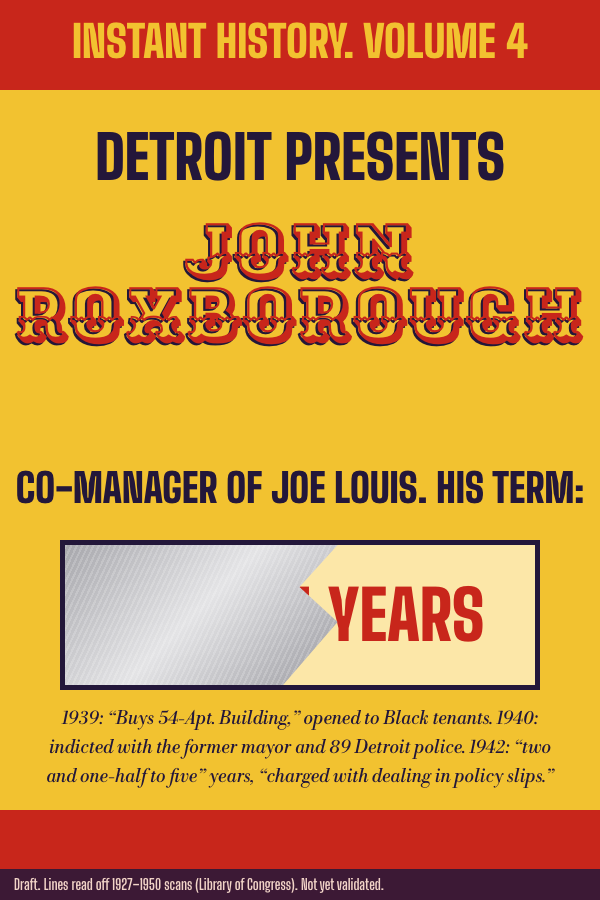
John Roxborough
What the money built
The corner of a champion: he co-managed Joe Louis. In 1939, John Roxborough Buys 54-Apt. Building
. The paper said the building was occupied by whites
and that its landlord had objected to Negro visitors
; now it would be available to colored tenants.
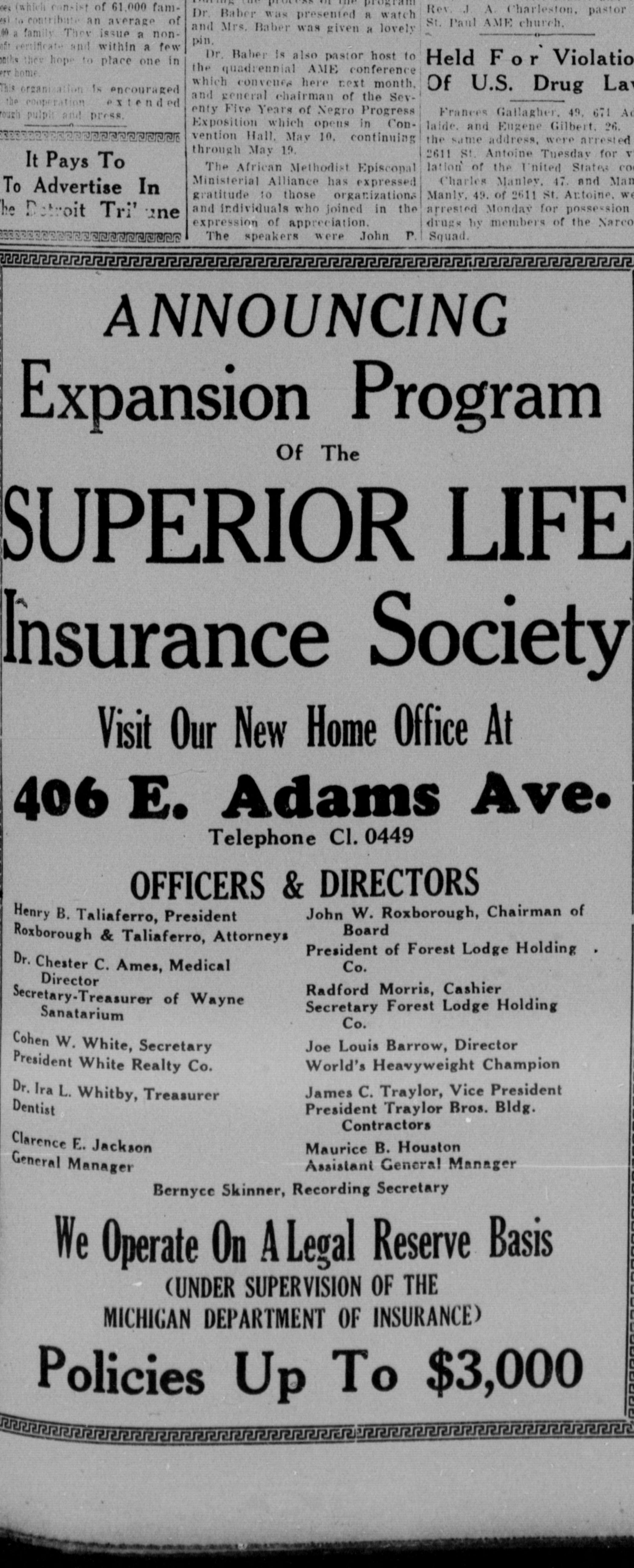
In 1940 a Detroit insurance company, Superior Life, listed John W. Roxborough, Chairman of Board
and Joe Louis Barrow, Director.
What it cost
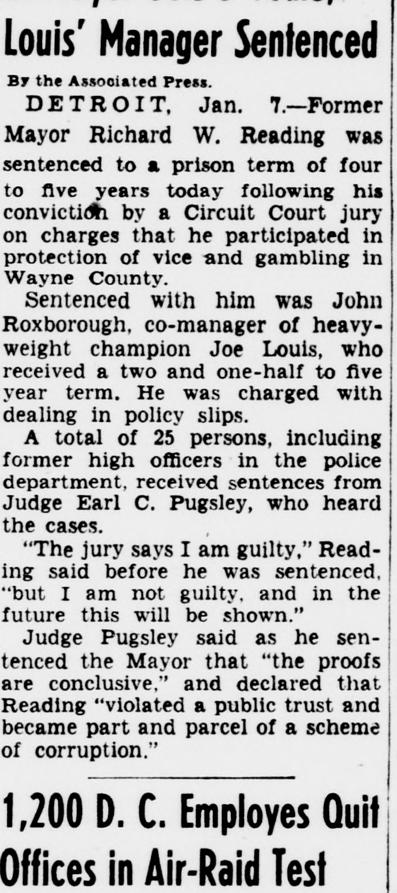
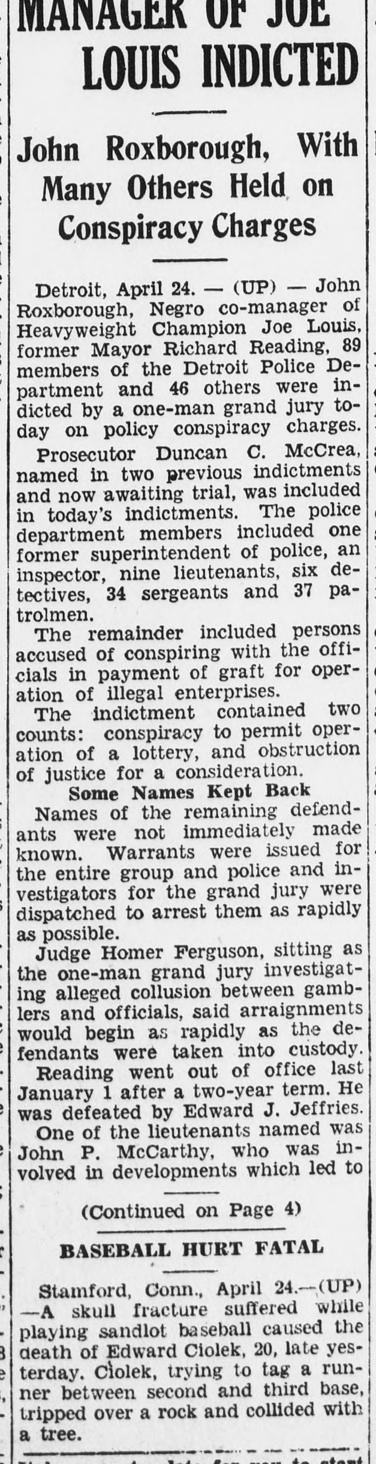
In April 1940 a one-man grand jury indicted Roxborough with former Mayor Richard Reading, 89 members of the Detroit Police Department and 46 others
on policy conspiracy charges. In 1942 the former mayor got four to five years
for protection of vice and gambling
; Roxborough got a two and one-half to five year term
, charged with dealing in policy slips.
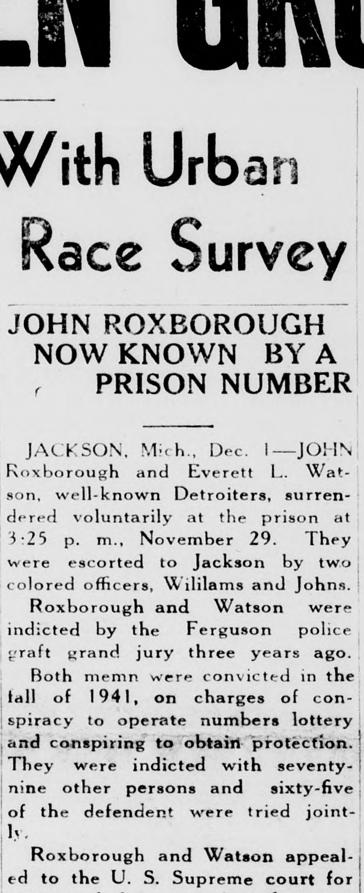
In 1944 a paper gave his conviction as conspiracy to operate numbers lottery and conspiring to obtain protection,
and he was now known by a prison number.
In September 1946 the State Parole Board
let him out.
What players paid: not yet sourced for Detroit. We won’t borrow another city’s odds.
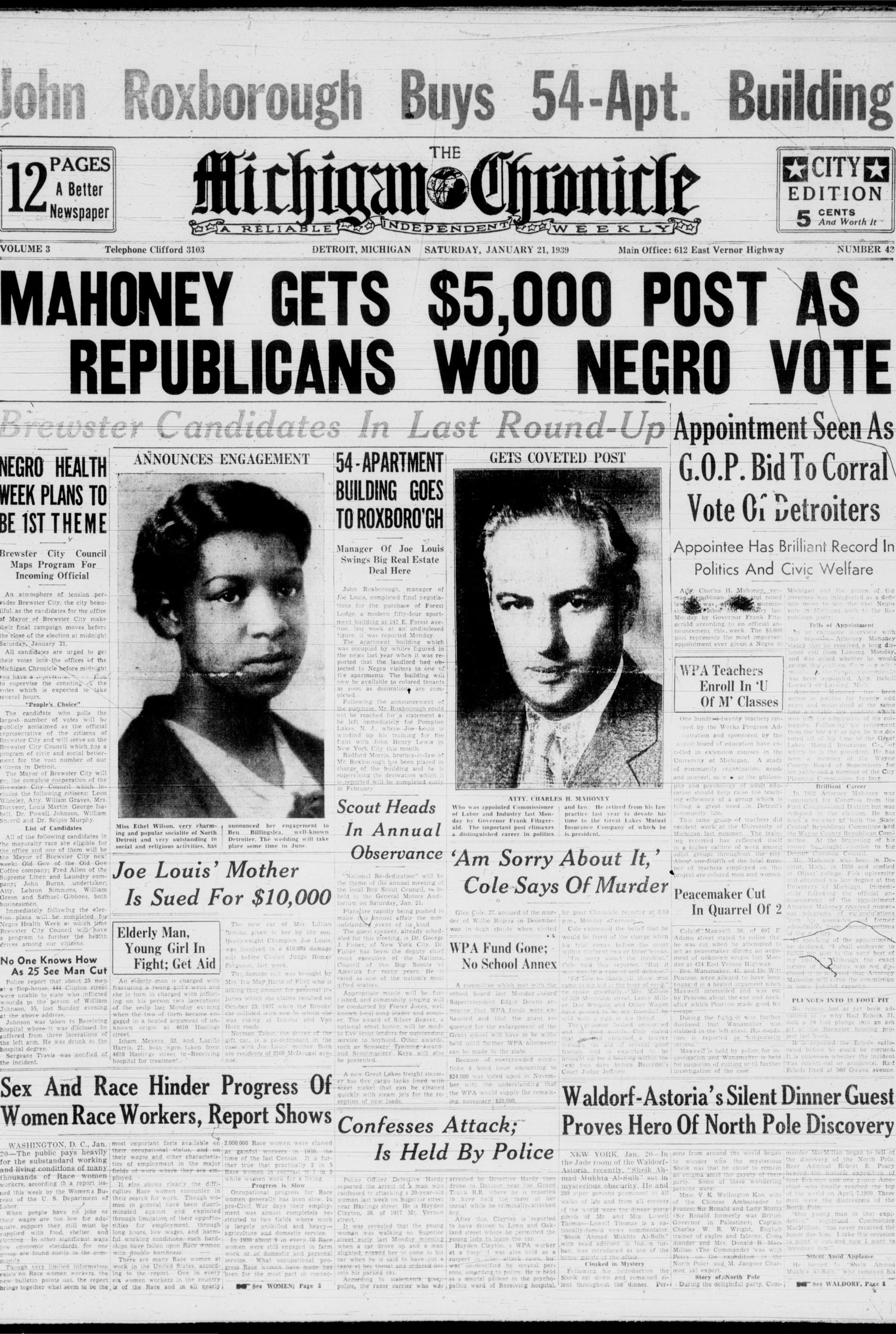 Michigan Chronicle, 21 Jan 1939
 Evening Star, 7 Jan 1942
 Gary American, 1 Dec 1944
 Detroit Tribune, 20 Apr 1940
 Waterbury Democrat, 24 Apr 1940 (UP)
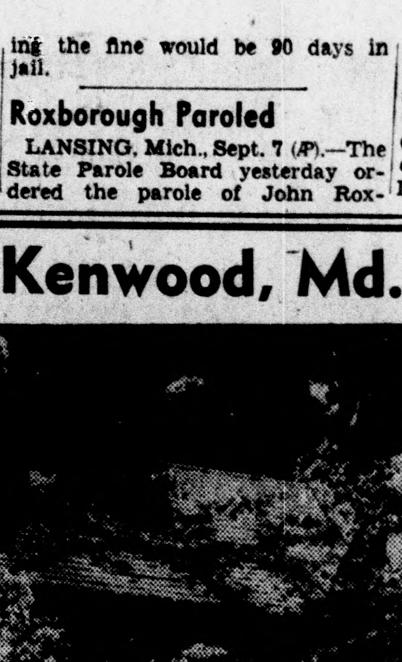 Evening Star, 7 Sep 1946
Period papers, period terms: quoted as printed.
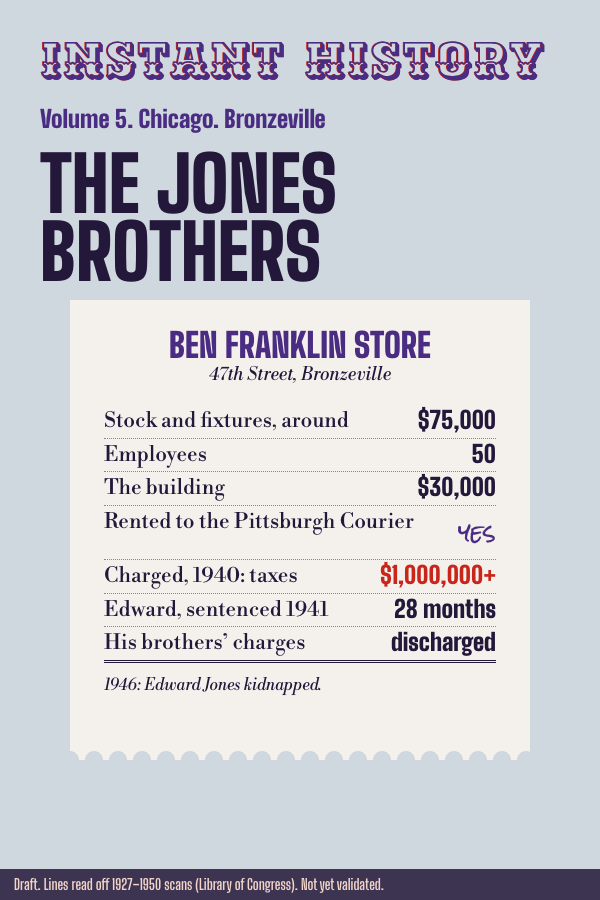
The Jones Brothers
What the money built
Edward Jones told the Senate in 1950 that he had driven a taxi and worked as a New York Central porter, and that after he quit the railroad he went into policy with my brothers.
Asked if that was the early 1930s: I imagine something on that order.
In 1940 the papers said: Colored numbers barons here invest their earnings in the area from which their income is derived.
The Ben Franklin store: Fixtures and merchandise are valued at around $75,000 and there are 50 employes.
Their building on 47th Street also housed other businesses, among them the Pittsburgh Courier’s Chicago office, that the paper said would otherwise be elsewhere because most of the stores and buildings owned by whites refuse to rent to Negroes.
What it cost
Charged, 1940: a federal grand jury charged the three brothers with evading more than $1,000,000 in income taxes.
It was not proven against two of them. In 1941 Edward was sentenced to serve 28 months in the penitentiary for income tax evasion.
He took the rap for his two brothers
, and The brothers and Gilson were discharged.
In 1950 the AP gave his conviction as evading $198,786 in taxes on his 1938 income.
What players paid: the pennies, nickels and dimes that South Siders bet,
the government said in 1941, and The Jones boys get 75 per cent of everything that is bet.
In 1950 his partner Theodore Roe estimated that 60 per cent of the residents of the Negro wards play policy,
with an average bet
of 25 cents.
In 1946 Edward Jones was kidnapped. Police thought he may have been kidnaped by former henchmen of Scarface Al Capone
. In 1950, asked if anyone was trying to muscle in on his wheel, he told the Senate, No; I don’t think so. That is my opinion.
When counsel asked, You think they just wanted the money?
he answered, That is all.
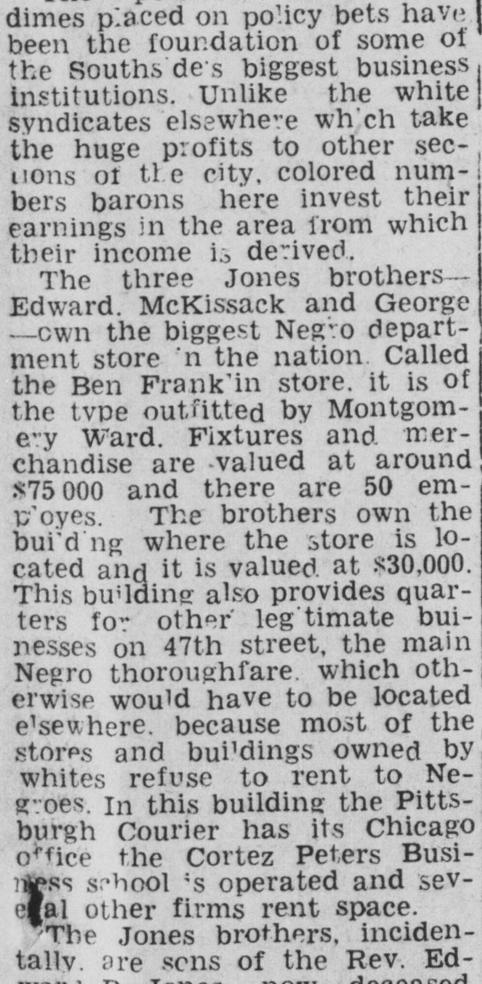 Savannah Tribune, 14 Mar 1940
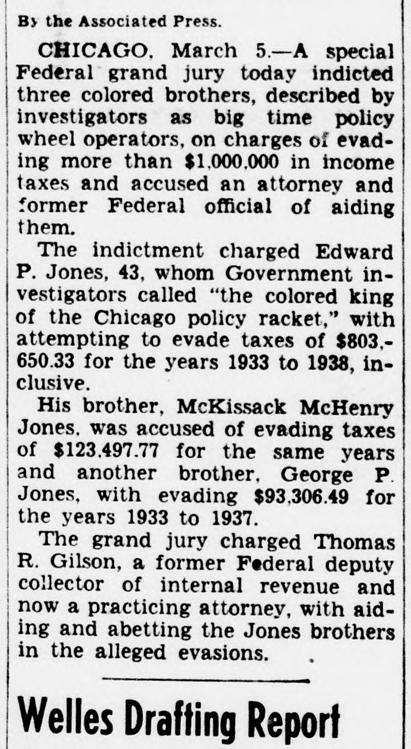 Evening Star, 5 Mar 1940
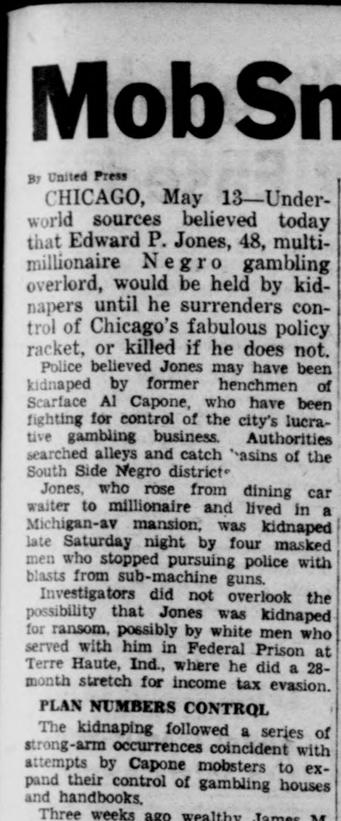 Washington Daily News, 13 May 1946
 Atlanta Daily World, 22 May 1946
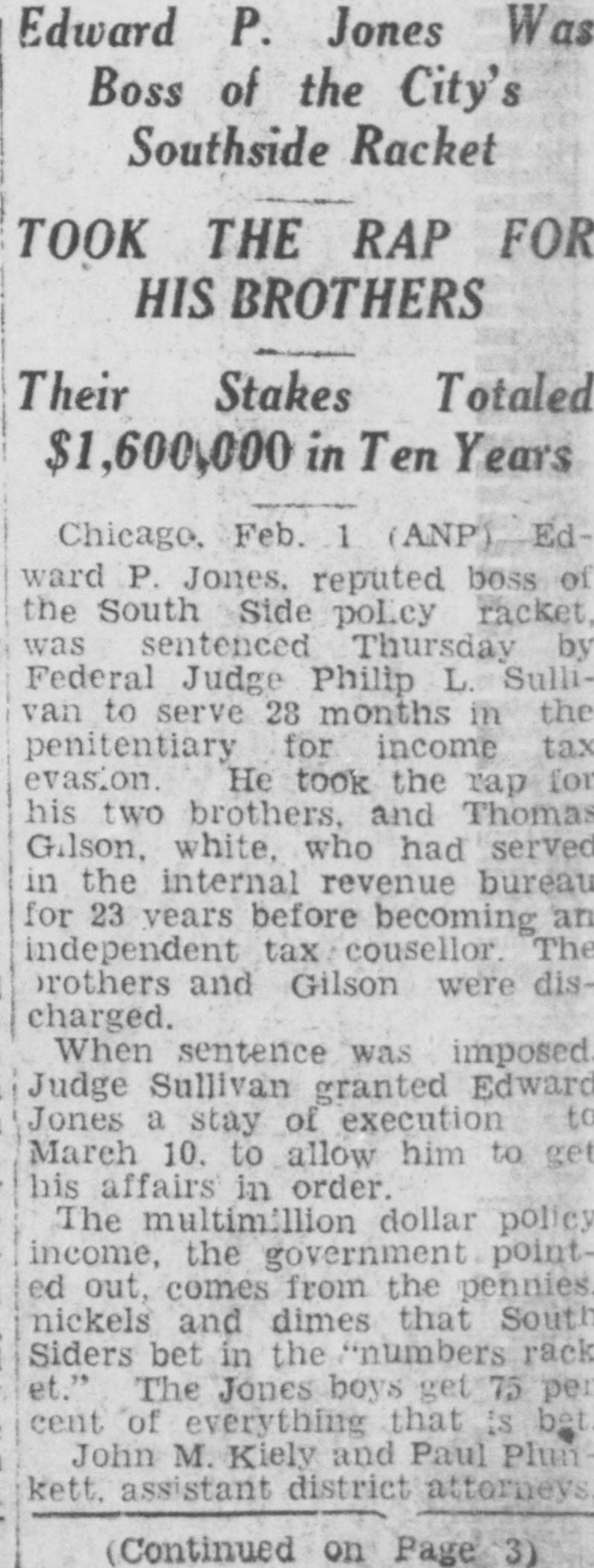 Savannah Tribune, 6 Feb 1941 (ANP)
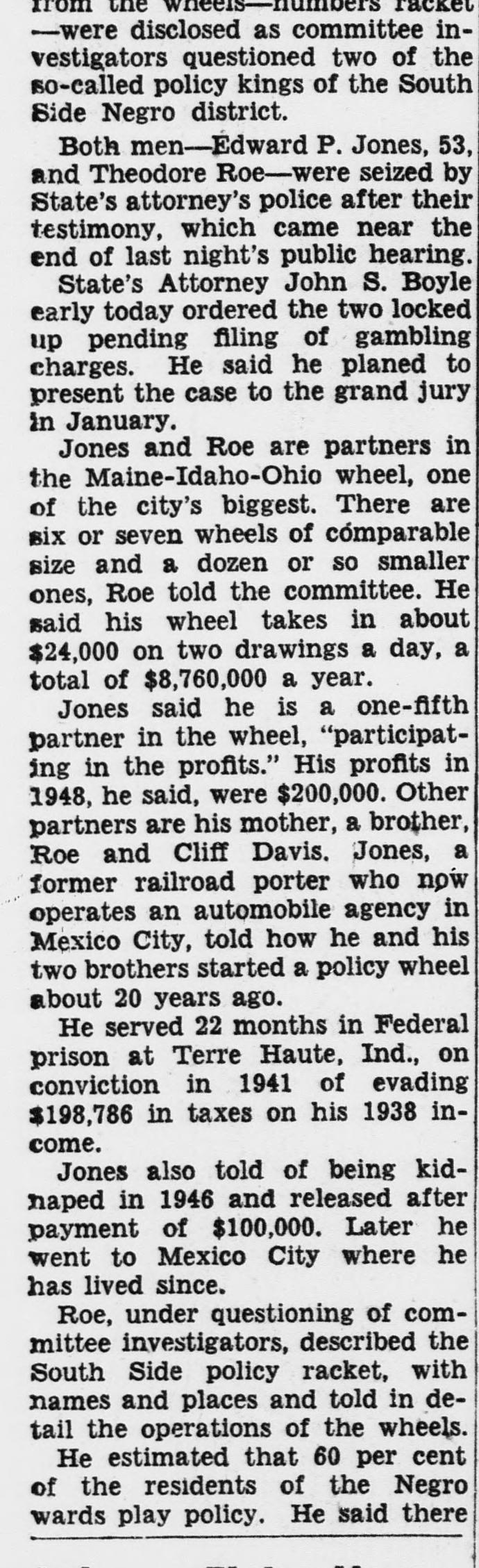 Evening Star, 20 Dec 1950 (AP)
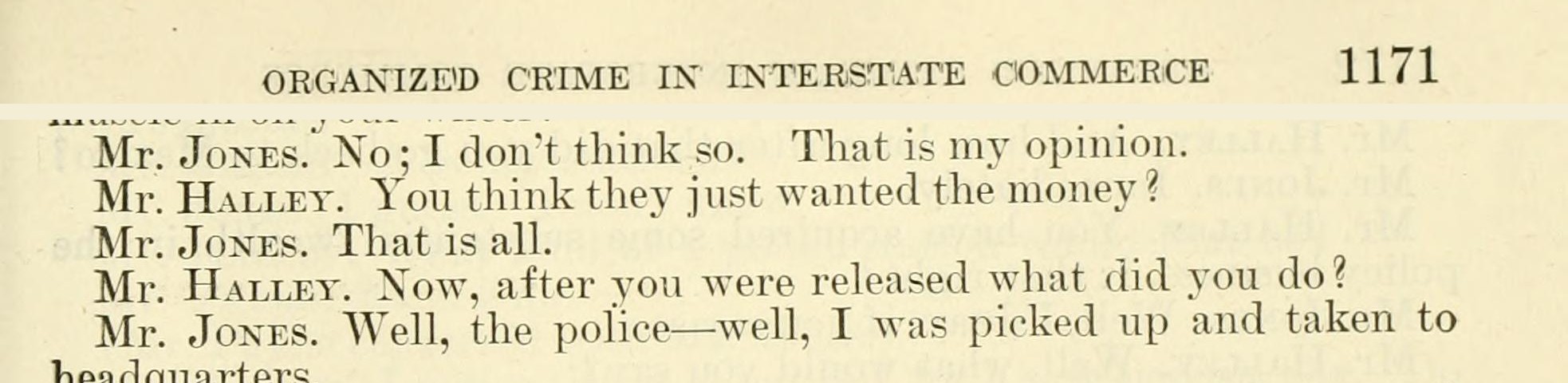 Senate hearing, 19 Dec 1950, p. 1171
Period papers, period terms: quoted as printed.
SOURCES DISAGREEOn his time in prison: sentenced to 28 months (ANP, 1941); a 28-month stretch
(UP, 1946); served 22 months
(AP, 1950).
SOURCES DISAGREEOn why he was taken: the police theory in 1946, his own testimony in 1950. And on who took him: one 1946 paper reported that police said the ransom car carried four white men
, which is about the ransom car, not the kidnappers. Under oath he said they were masked and he couldn’t say definitely.
TO CHECKWho sold the Chicago wheels protection: a 1941 lawsuit alleged payments to police, and the Treasury reportedly refunded money to the brothers in 1942. Neither is read off the scan yet.