Slide 01 of 27
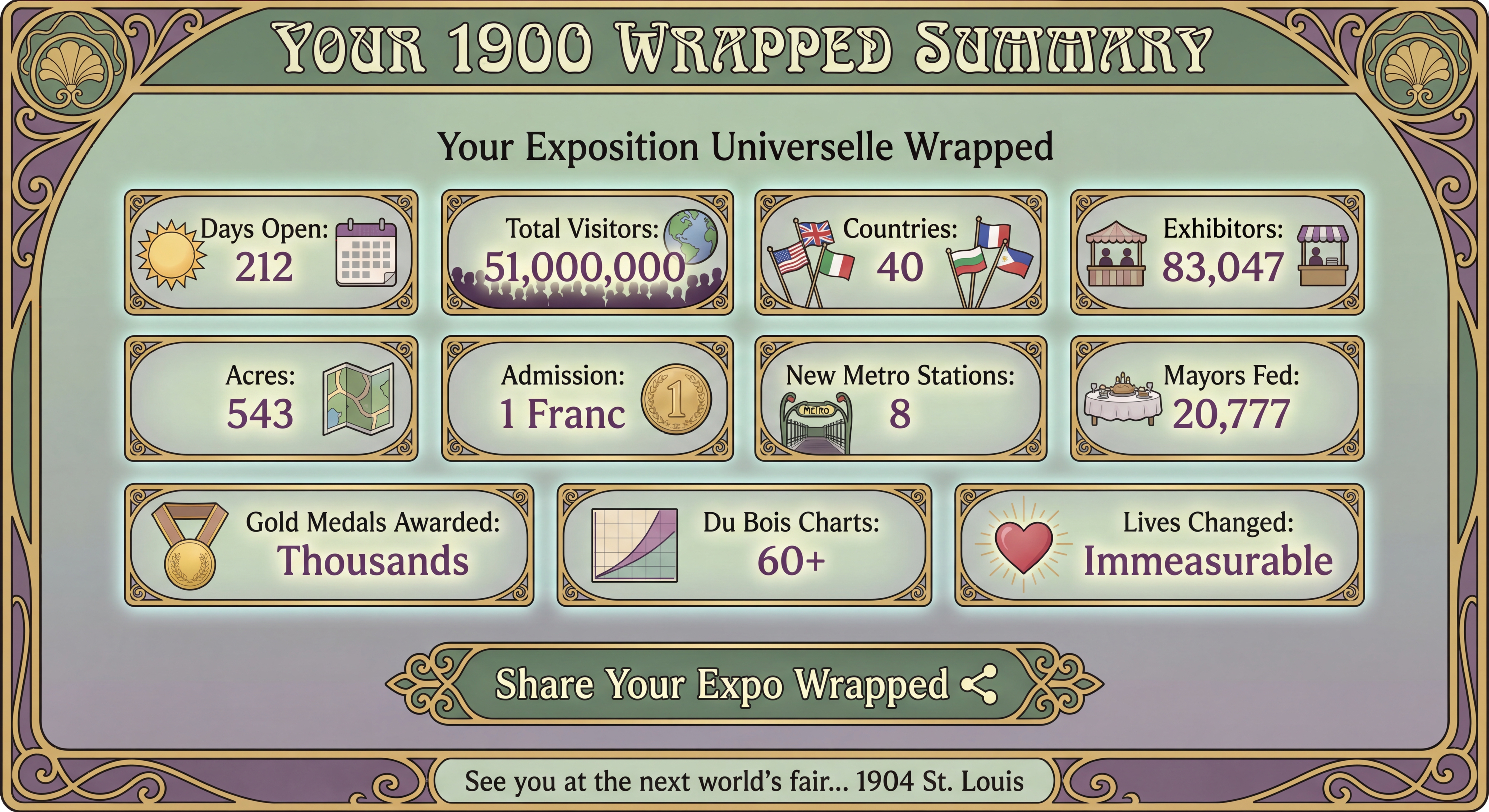
Total Attendance
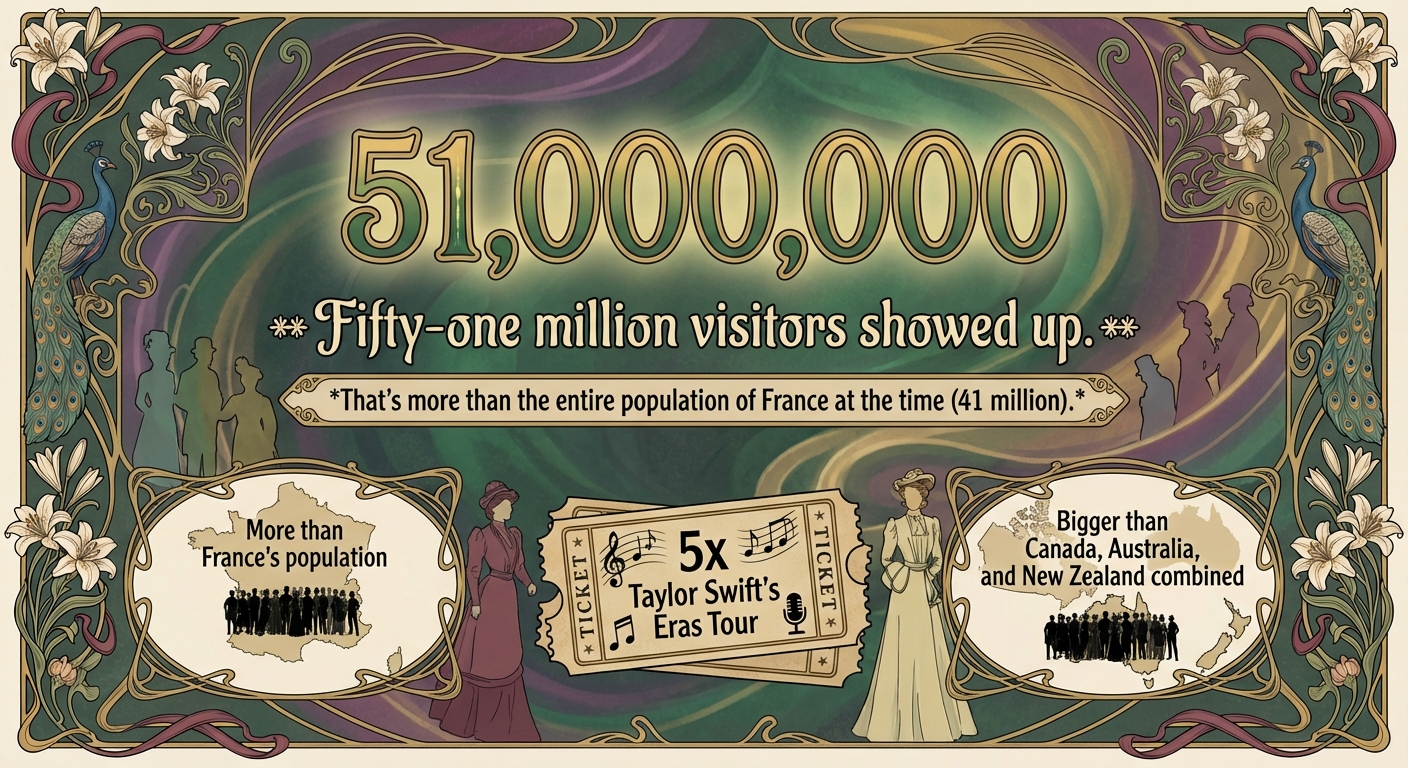
0
visitors showed up
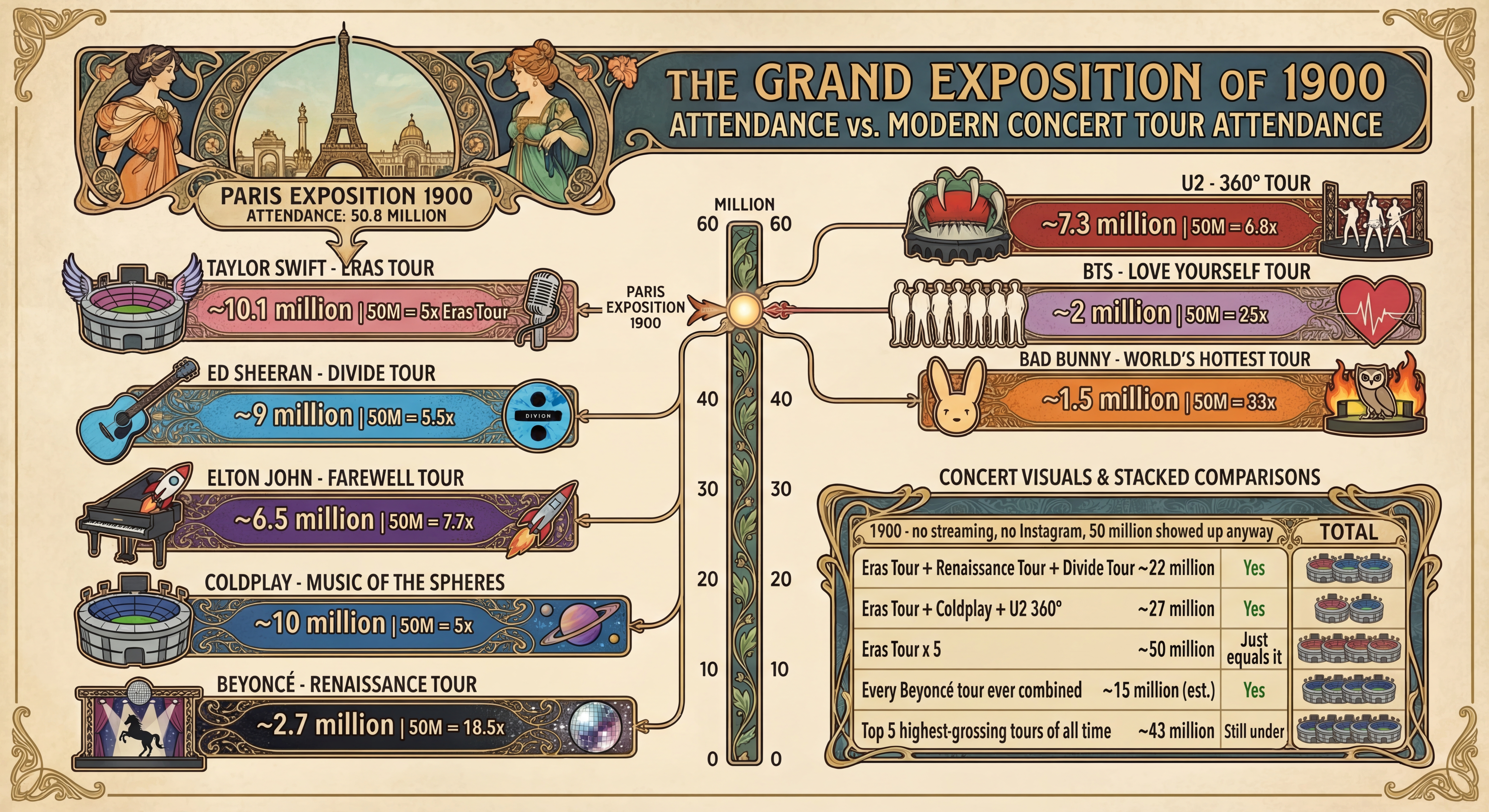
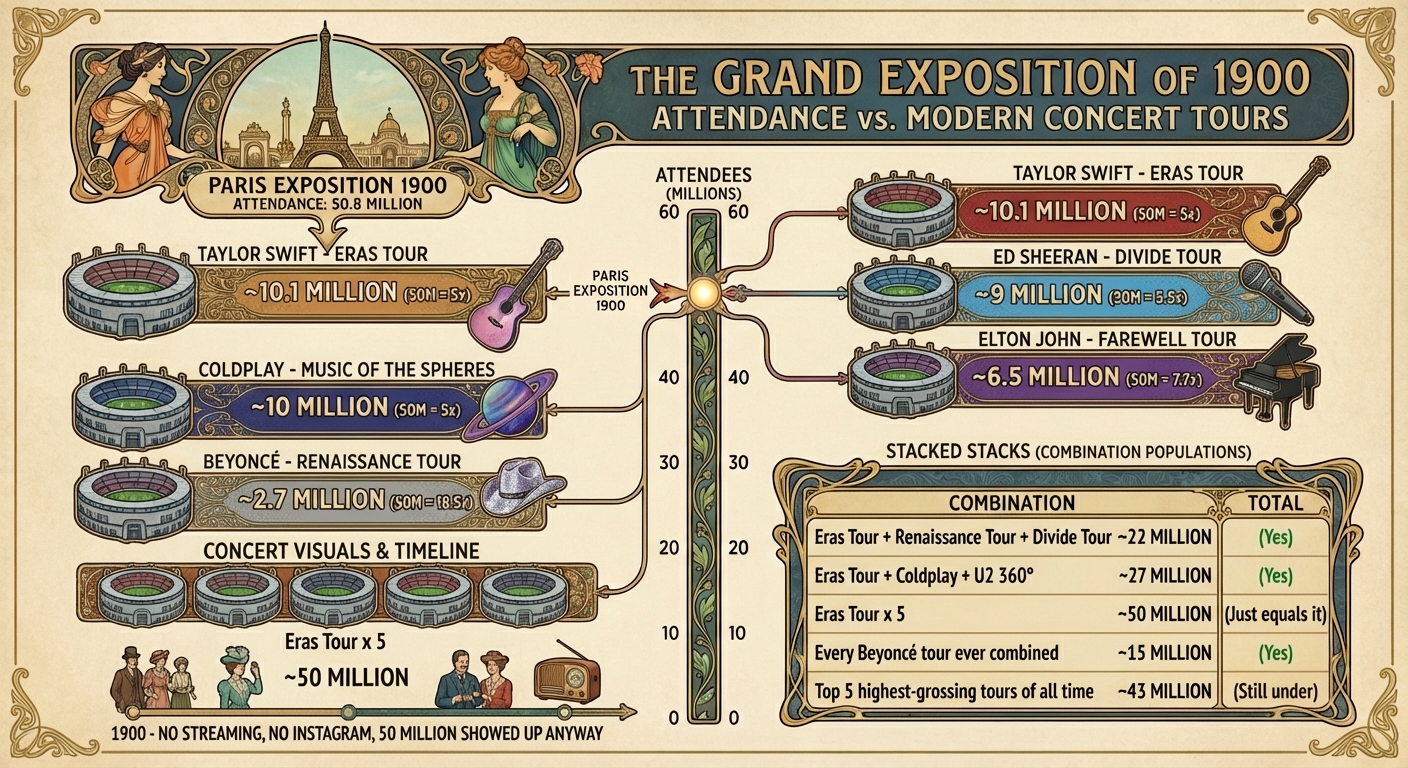
No streaming. No Instagram. 50 million showed up anyway.
🌎 More than France’s entire population at the time (41M)
Your year at the world’s fair • 212 days of wonder
The 1900 Paris Exposition was the most attended event in human history up to that point. It wouldn't be surpassed until the 1970 Osaka Expo (64 million).
To put 51 million in perspective: the entire population of the United States in 1900 was only 76 million. Nearly two-thirds of America's population equivalent walked through those gates.
On the single busiest day—September 2, 1900—over 1.2 million people visited. That's roughly the entire population of Prague at the time, all crammed into 543 acres.
Of World Travelers
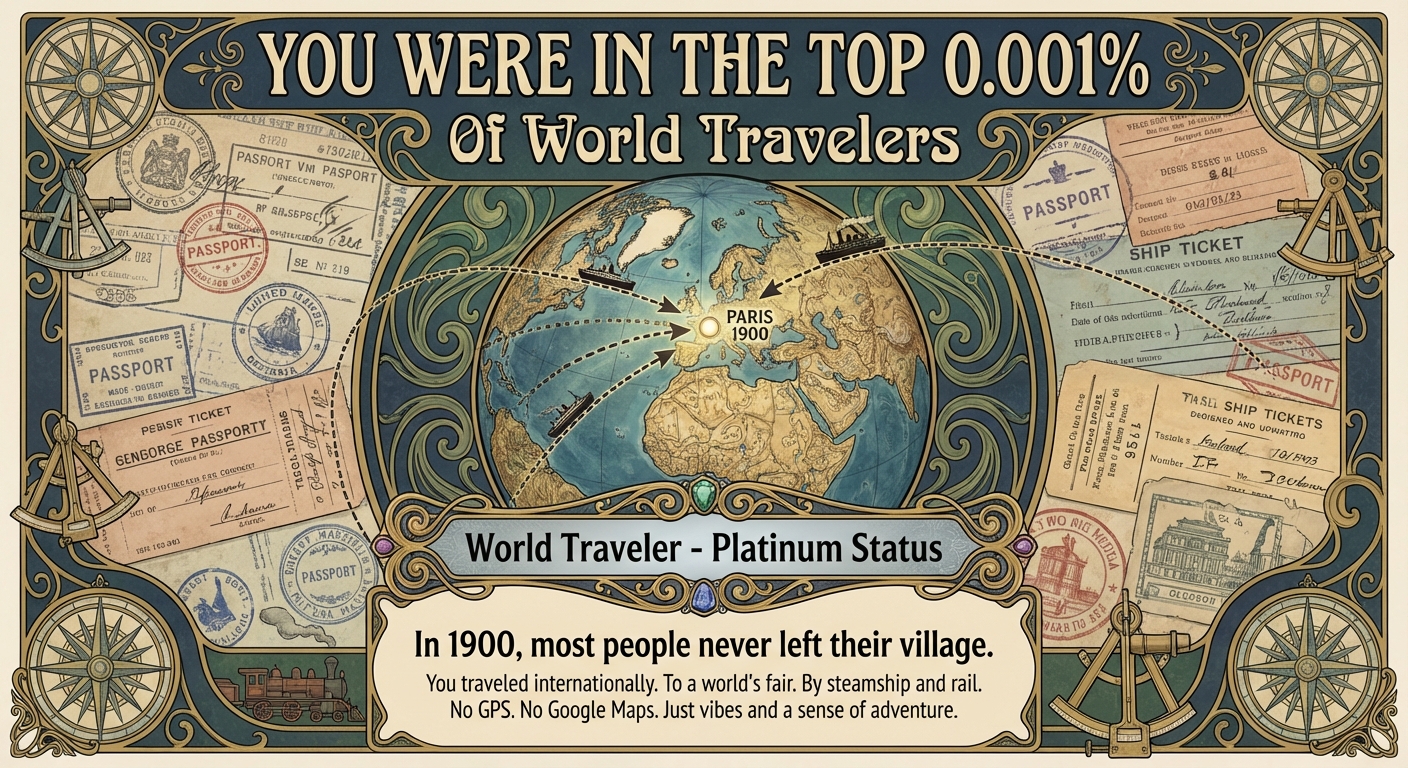
In 1900, most people never left their village. You traveled internationally. By steamship and rail. No GPS. No Google Maps. Just vibes and a sense of adventure.
40 countries officially participated
56 were invited. 40 said yes. Plus colonies and protectorates from France, Britain, Netherlands, and Portugal.
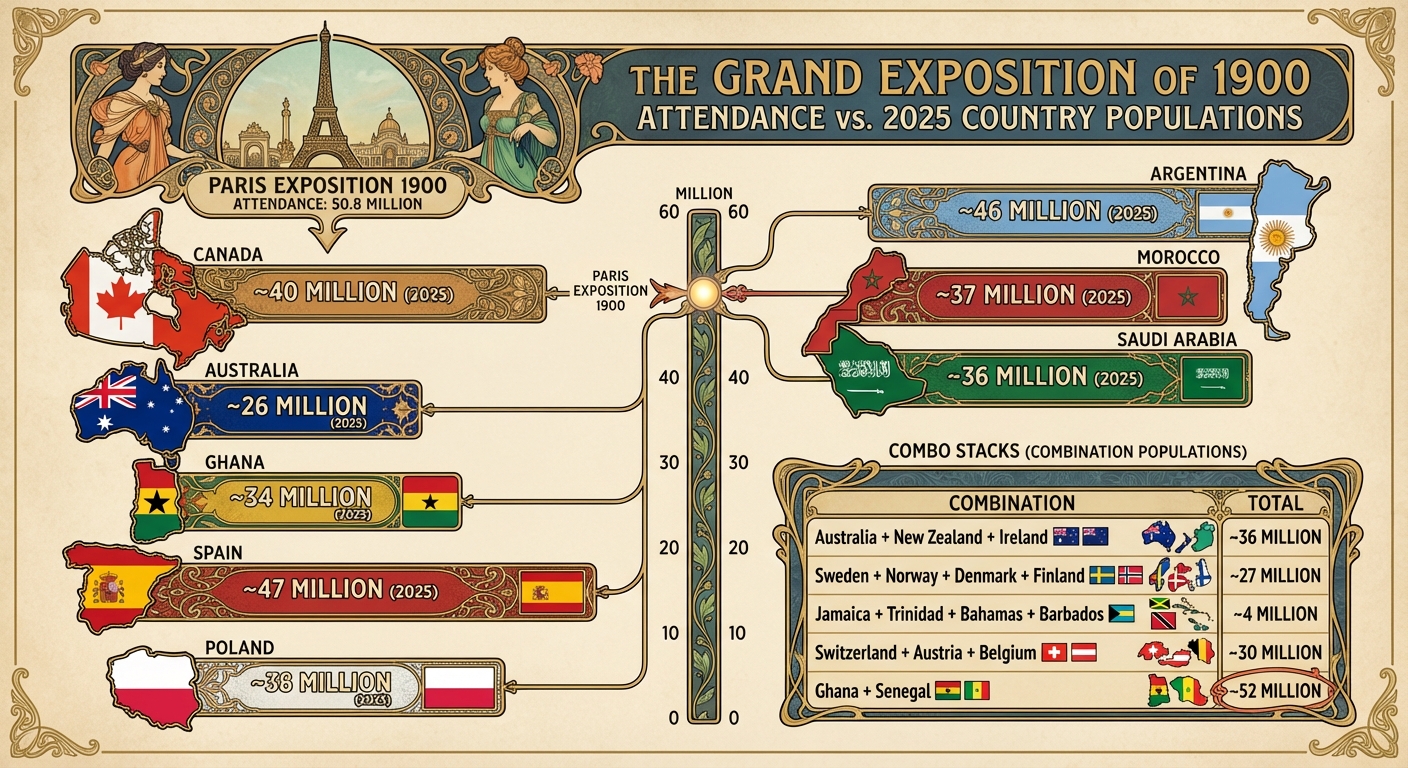
50.8 million visitors vs. modern populations
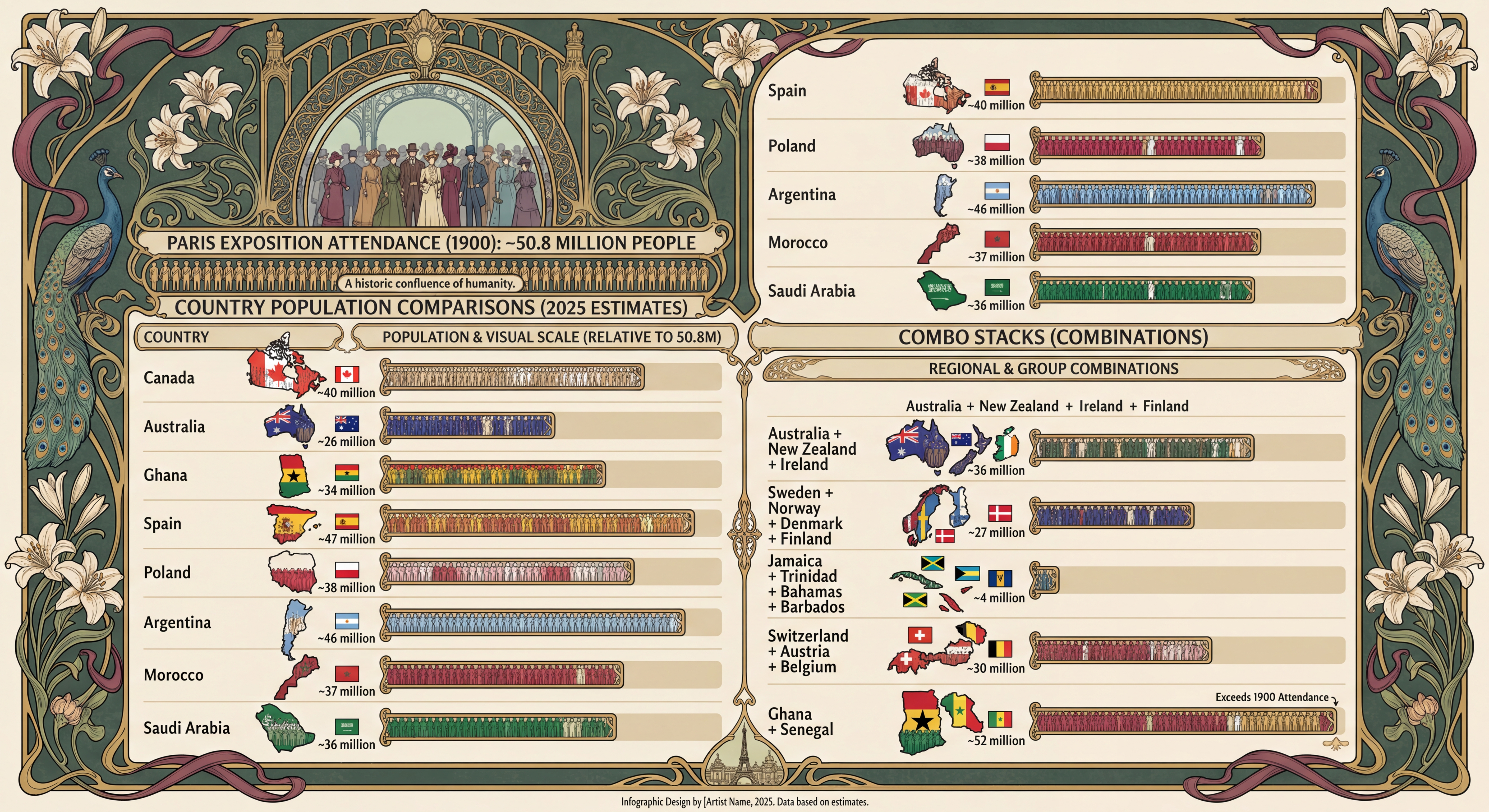
Combine Australia + New Zealand + Ireland + Finland—that's about 36 million people today. The Expo still beat them.
Stack Jamaica + Trinidad + Bahamas + Barbados together? That's roughly 4 million. The Expo had that many visitors in a single week.
The only way to match the Expo's attendance with modern concert tours? You'd need to run Taylor Swift's Eras Tour five times back-to-back.
No streaming. No Instagram. Still unmatched.
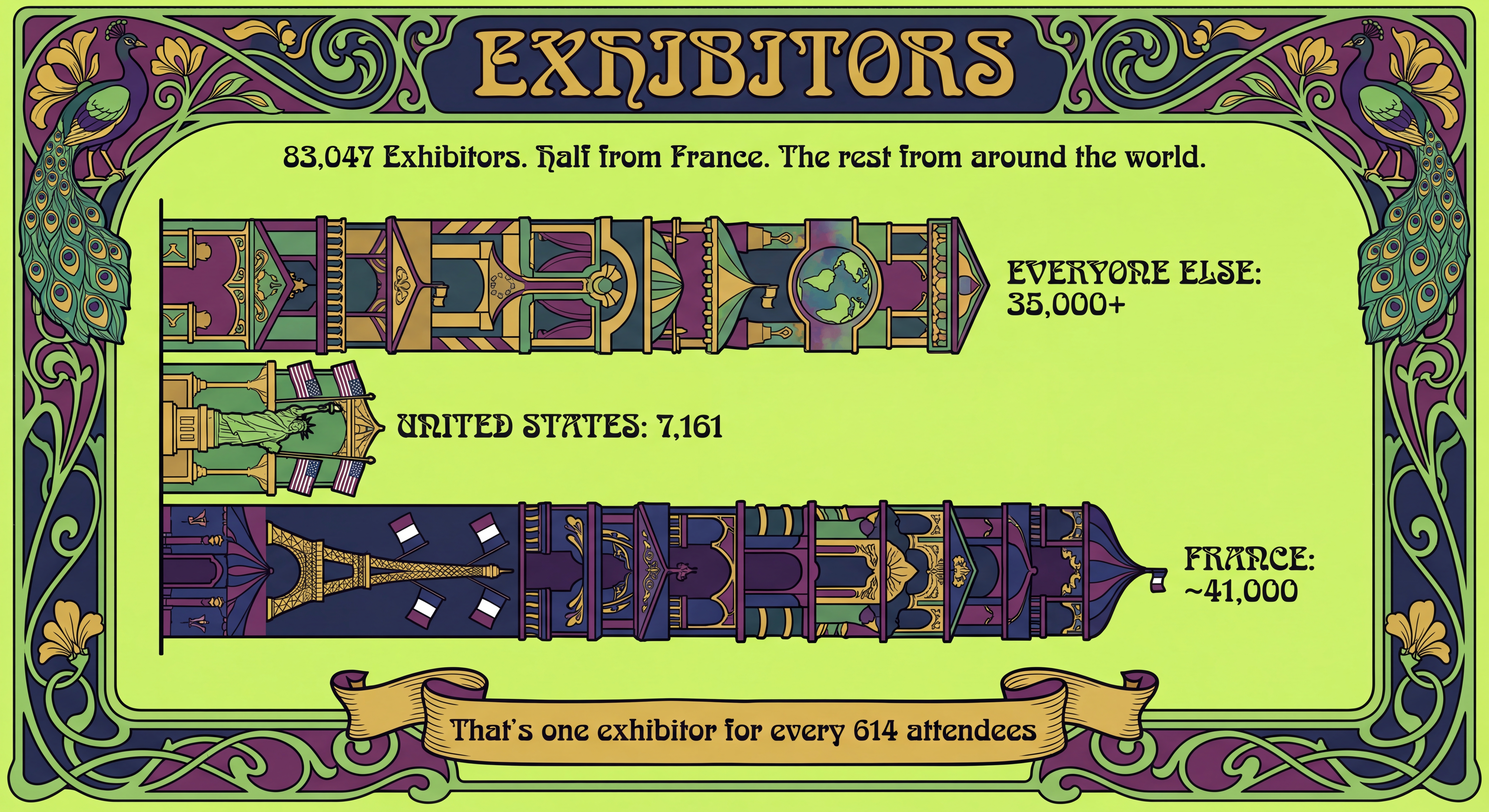
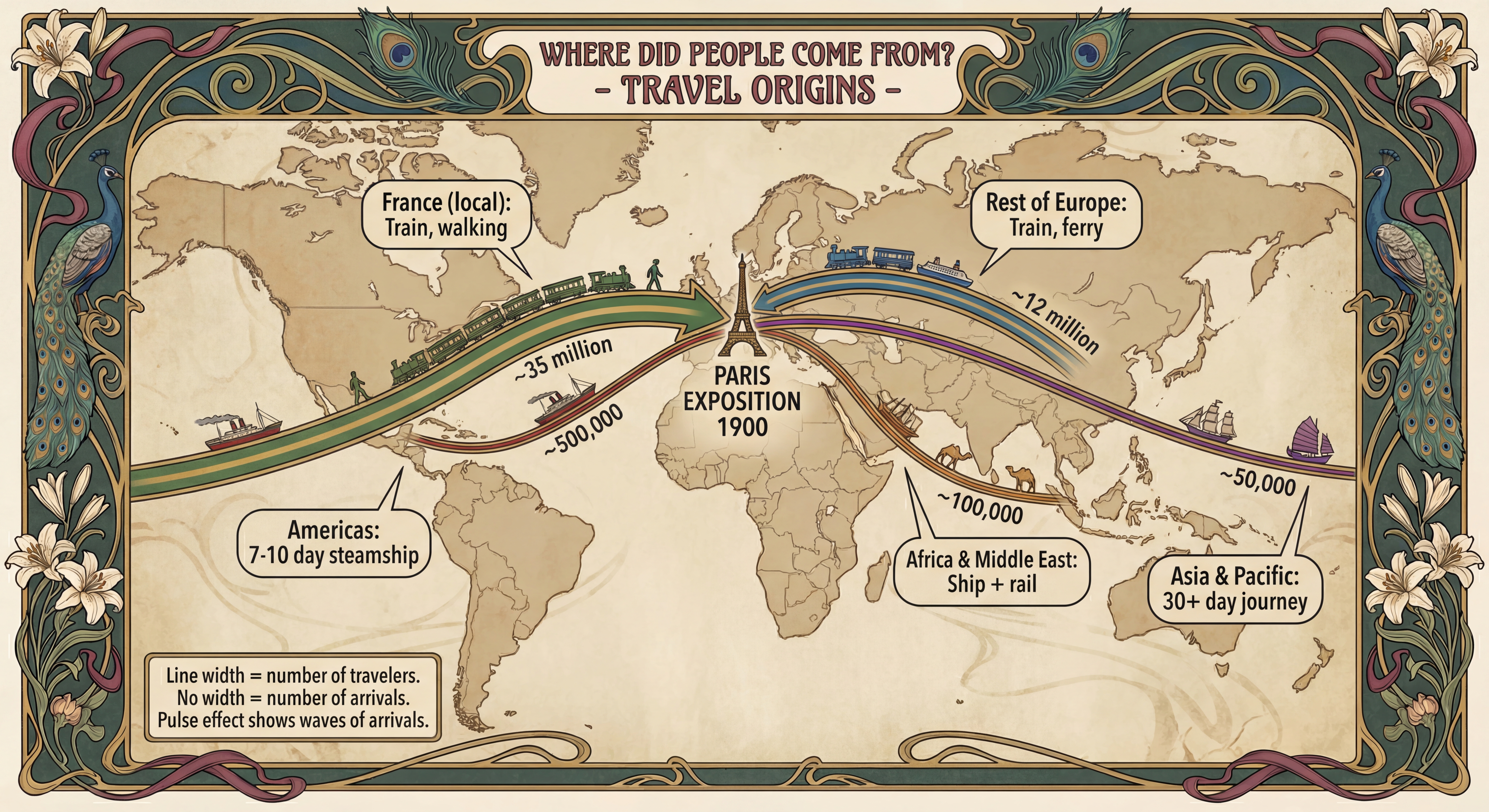
Half from France. The rest from around the world.
No Etsy. No Amazon. Just showing up.
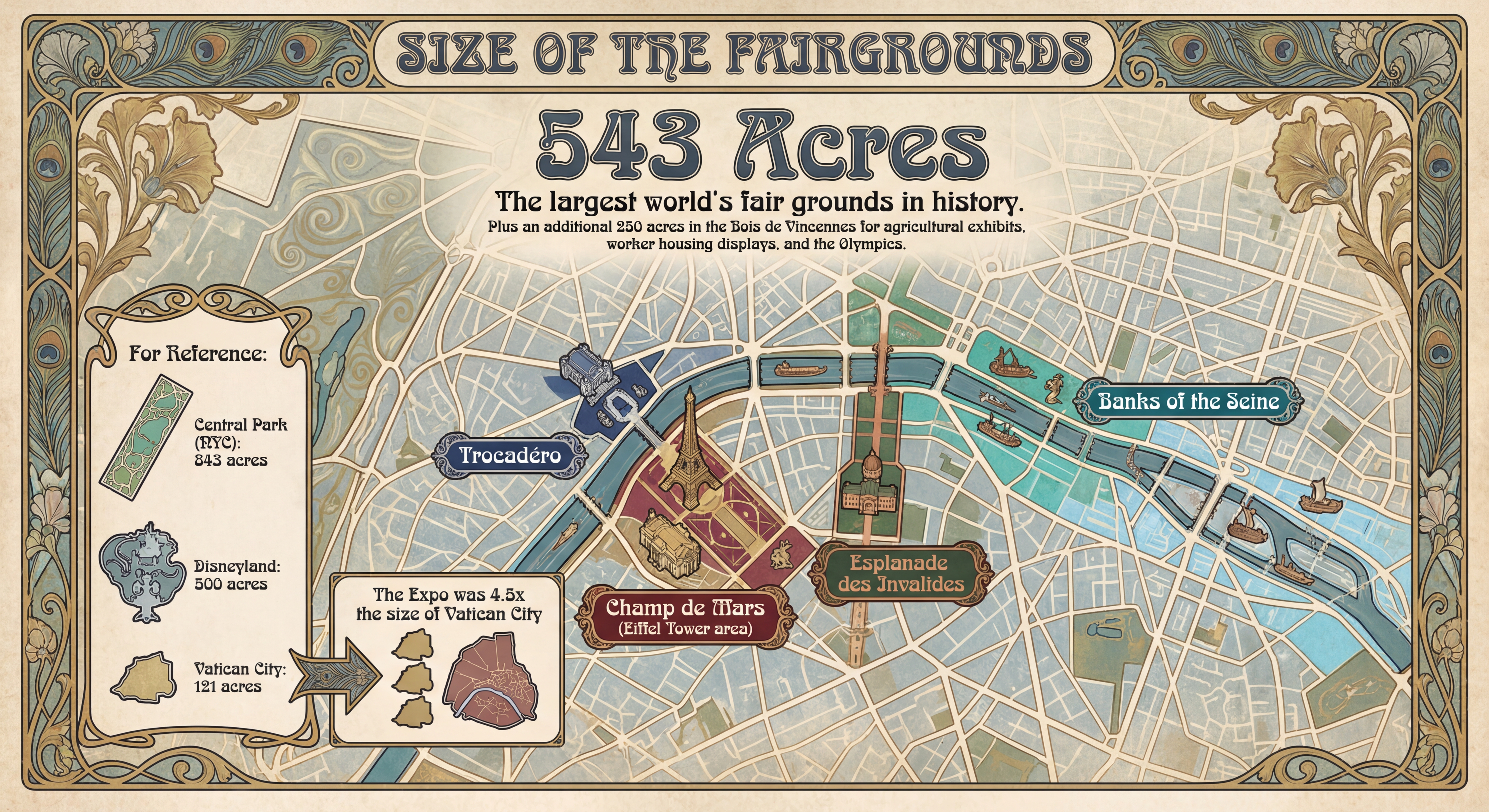
The largest world’s fair grounds in history
Your ticket. Your 2 hours of labor.
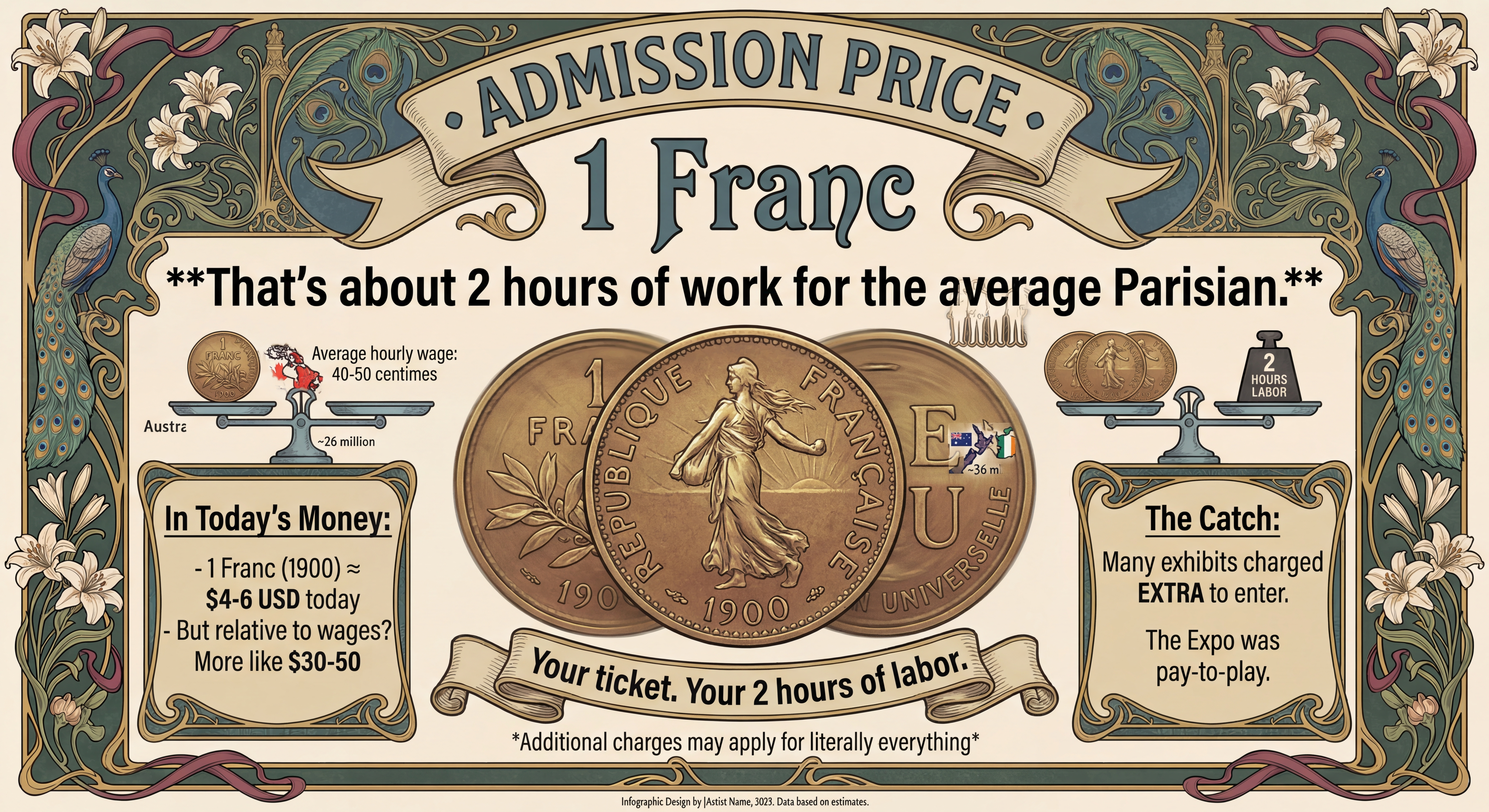
*Additional charges may apply for literally everything*
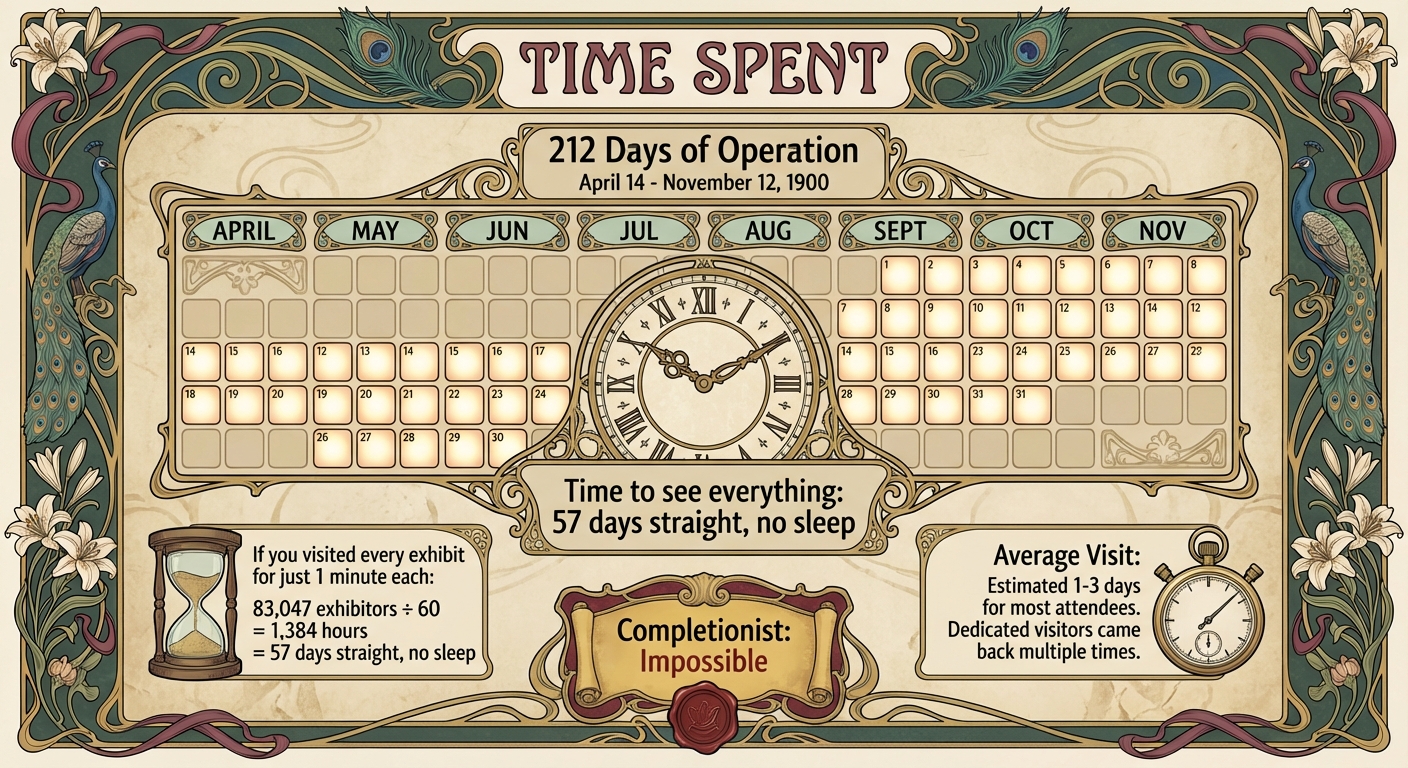
212 days of operation. 57 days to see it all.
Travel origins — the world converged on Paris
Test your 1900 knowledge
How long did it take to travel from New York to Paris in 1900?
The fastest ocean liners of 1900 could cross the Atlantic in about 7 days. Most passengers took 8-10 days. And that's just the ocean crossing—you still had to get to the port city first. From Tokyo? That was a 30-40 day journey.
On Repeat: 1900 — Innovations debuted at the Expo
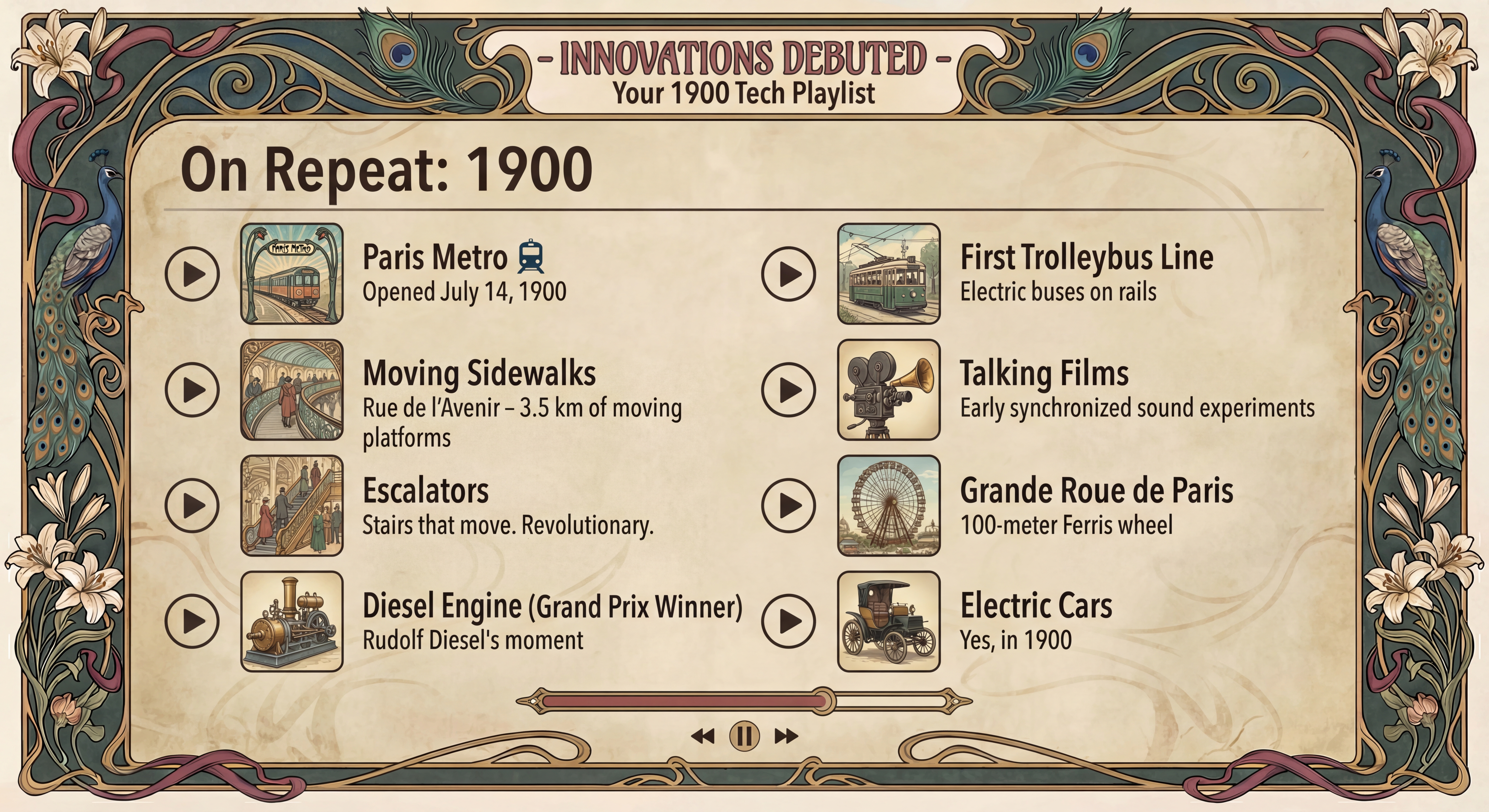
Yes, electric vehicles were showcased at the 1900 Expo. In fact, at the turn of the century, electric cars outsold gasoline cars in the United States.
The moving sidewalk (Trottoir Roulant) was 3.5 kilometers long and moved at two speeds—visitors stepped from a slow platform to a faster one. Over 6 million people rode it during the Expo.
The Paris Metro opened on July 19, 1900, specifically timed for the Exposition. Line 1 ran from Porte Maillot to Porte de Vincennes. It still runs today.
Pick the one you’d most want to experience
If you were at the 1900 Expo, which innovation would you try first?
First Olympics outside Greece • Most chaotic Olympics ever
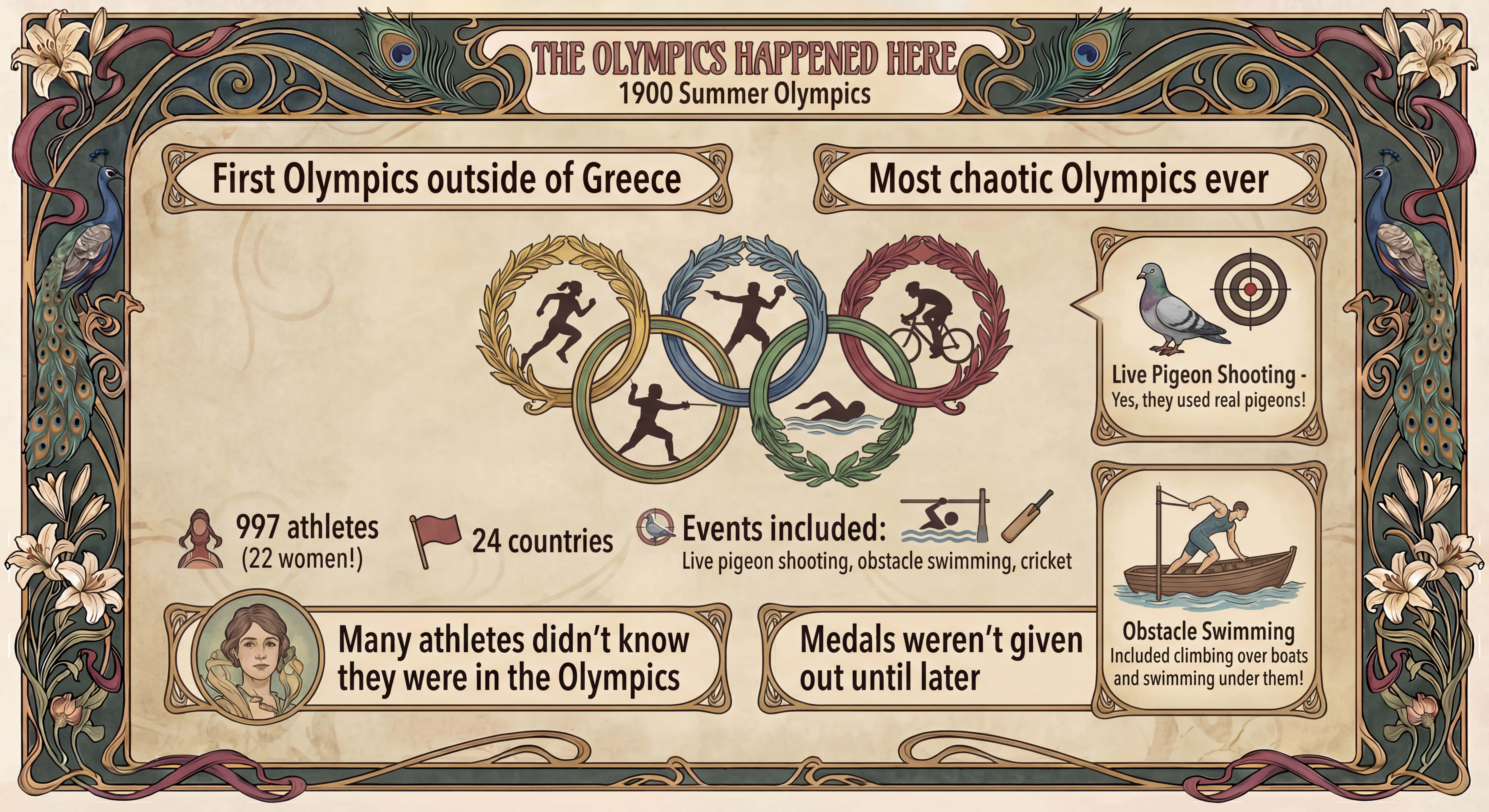
Live pigeon shooting was an official event. The winner killed 21 birds. It remains the only Olympic event where animals were intentionally killed.
Many athletes didn't know they were in the Olympics. The Games were so poorly organized and intertwined with the Exposition that some competitors thought they were just in local sporting events.
The obstacle swimming race required competitors to climb over boats and swim under them—in the polluted Seine River.
Medals weren't awarded until years later. Some athletes never received them at all.
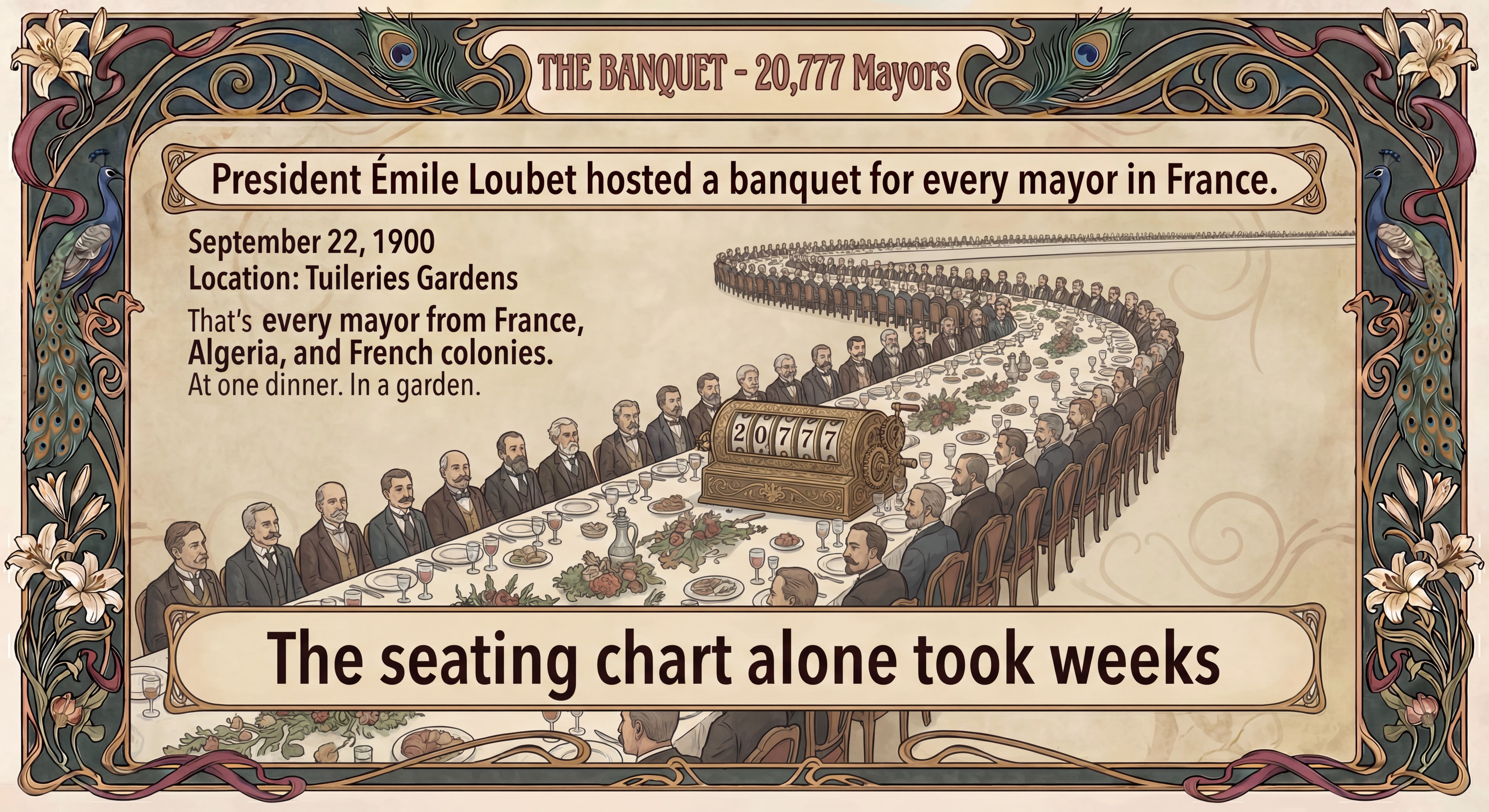
20,777 mayors. One dinner. In a garden.
Permanent structures—still standing 125+ years later
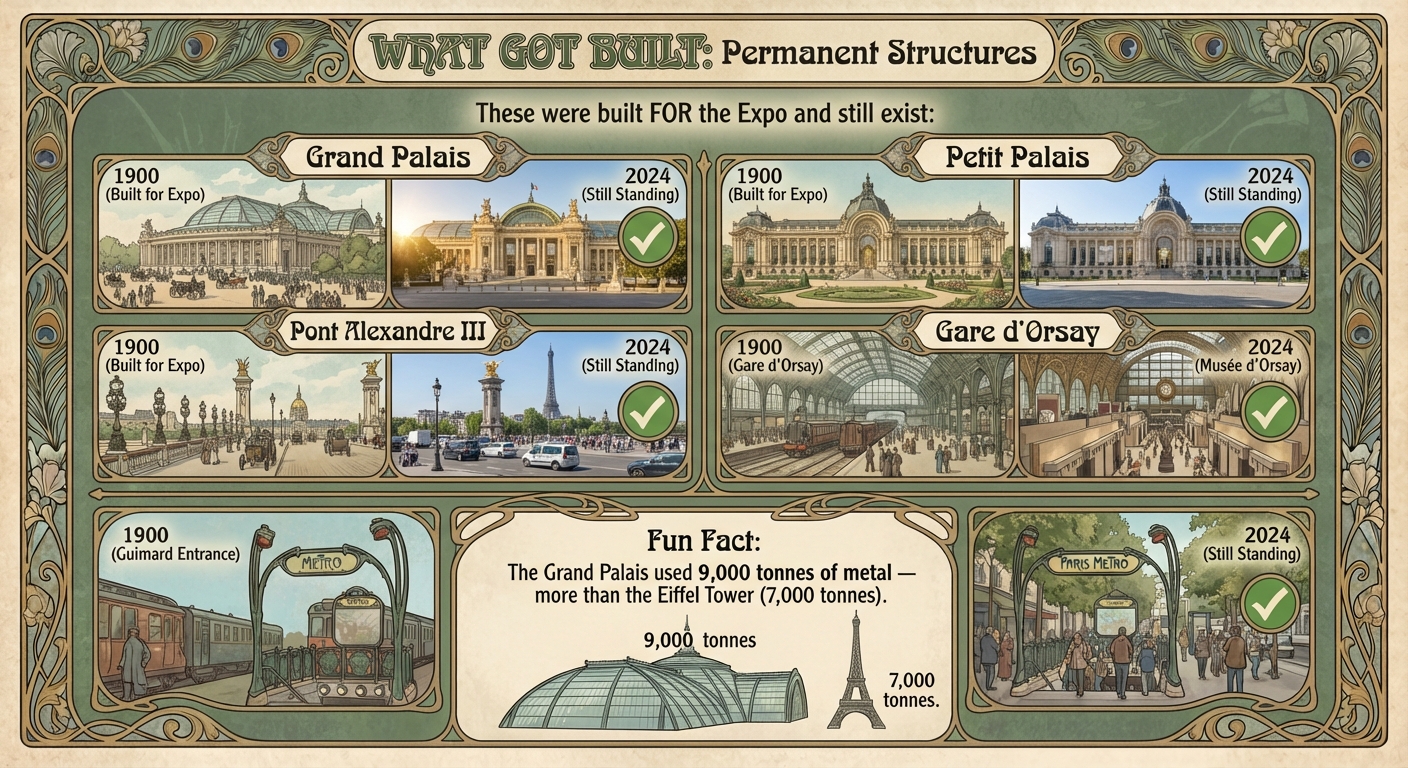
Fun fact: The Grand Palais used 9,000 tonnes of metal—more than the Eiffel Tower (7,000 tonnes).
125 years later, they’re still standing
Eiffel Tower


Grand Palais & Pont Alexandre III


Actual photographs & illustrations from 1900


Public domain photographs from Wikimedia Commons • Bibliothèque nationale de France
W.E.B. Du Bois • Gold Medal Winner • Palace of Social Economy
W.E.B. Du Bois
Sociologist • Data Pioneer • First Black Ph.D. from Harvard
“The problem of the twentieth century is the problem of the color line.”
In just 4 months, Du Bois organized one of the most remarkable exhibits at the entire Exposition: a comprehensive portrait of Black American life told through data, photographs, and artifacts.

The American Negro Exhibit at the Exposition Universelle, Paris, 1900 • Library of Congress

Tracks white and Black population growth in Georgia from 1790–1890, revealing parallel trajectories with distinct inflection points around emancipation.

Visualizes urbanization of Black Georgians. Despite post-war migration to cities, the vast majority remained rural—a pattern that would shift dramatically in coming decades.

Charts the dramatic rise in property value owned by Black Georgians—from nearly nothing after emancipation to millions by 1900. A story told in data.

One of Du Bois’s most visually striking spiral charts, mapping racial ancestry data. The form itself became an icon of data visualization artistry.
Original hand-drawn data visualizations from “The Georgia Negro” series • Library of Congress, Prints & Photographs Division
“W.E.B. Du Bois’s Data Portraits: Visualizing Black America” • Silas Munro
No Canva. No Figma. No datasets on the cloud. Just handmade truth, presented to the world.
What was the name of Du Bois's exhibit at the 1900 Paris Exposition?
Du Bois organized "The Exhibit of American Negroes" for the Palace of Social Economy. It featured over 60 hand-drawn data visualizations showing the social, economic, and educational progress of Black Americans since emancipation—and won a Gold Medal (Grand Prix).
What was happening when Du Bois was hand-drawing pie charts
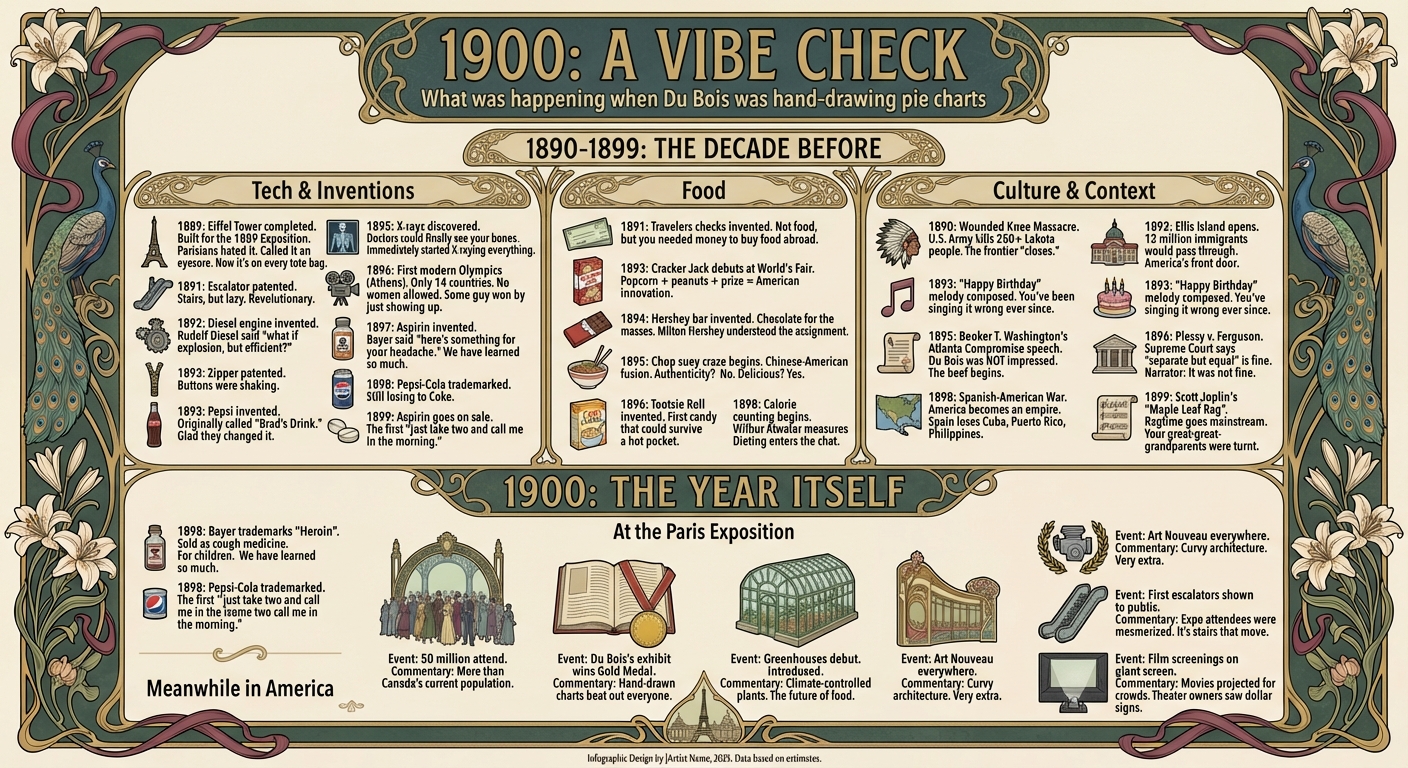
The year 1900 sat at the intersection of the old and new world. Horses still outnumbered cars in every city. The average life expectancy was 47 years.
Pepsi-Cola was trademarked the same year as the Expo. Bayer was selling "Heroin" as cough medicine. X-rays had only been discovered 5 years earlier.
The Exposition was literally a showcase for the turning point of civilization—the last great gathering before electricity, automobiles, and cinema would reshape everything.
The ripple effect of the Exposition
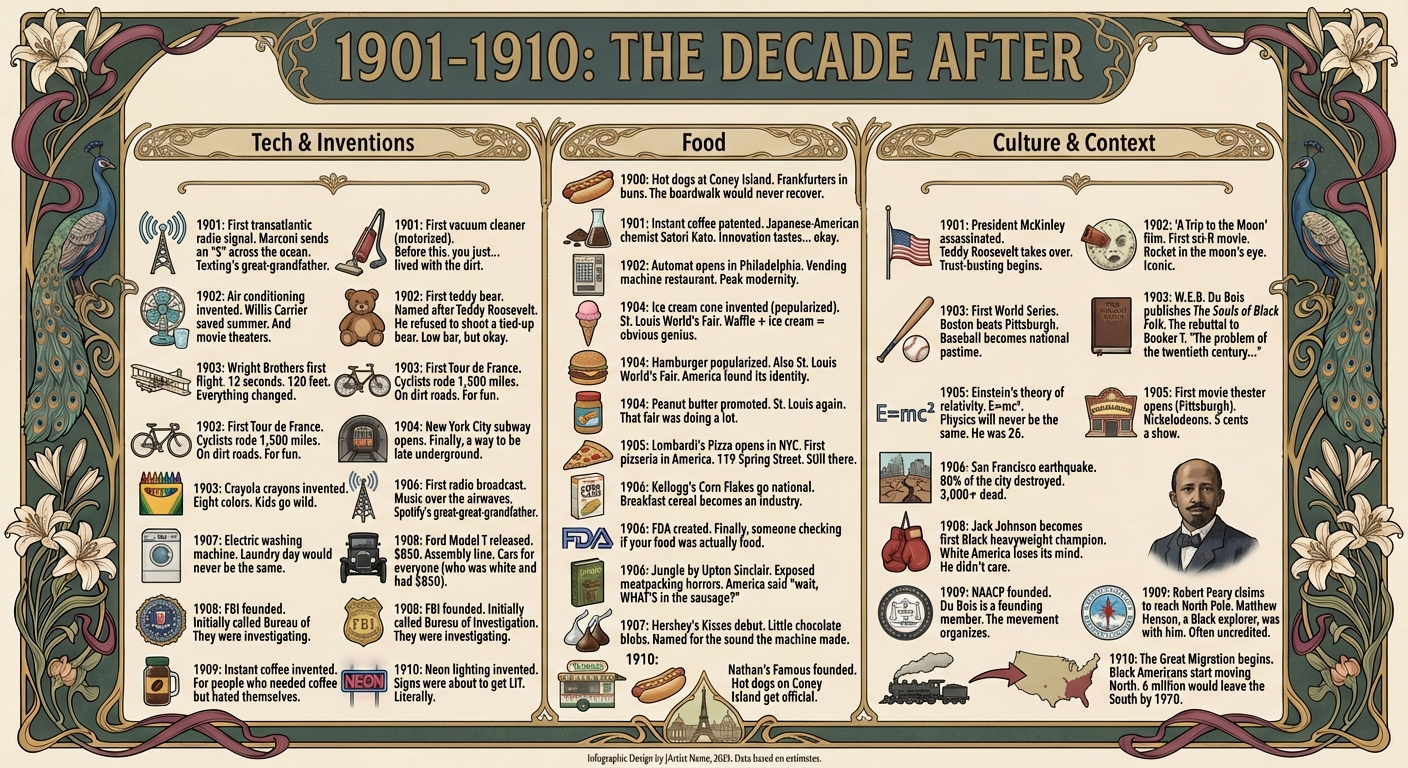
Actual footage from the 1900 Paris Exposition
“The Paris Exposition Universelle, 1900” — Historical film footage
How well did you pay attention?
How many tonnes of metal did the Grand Palais use?
The Grand Palais used 9,000 tonnes of steel—2,000 more than the Eiffel Tower. Its glass roof alone covers 77,000 square feet, making it the largest glass structure in Paris. It's still used for major exhibitions today.
International pavilions & grand architecture


Opening ceremony. President Loubet opens the gates. 500,000 attend on day one.
Paris Metro opens its first line—timed perfectly for the Expo.
Peak day: 1.2 million visitors in a single day.
The Banquet of Mayors: 20,777 mayors dine together in the Tuileries.
Closing day. 212 days of wonder come to an end.
Based on your quiz answers…
You belong at the intersection of art and technology. Like the Expo itself, you appreciate beauty in innovation and find elegance in progress. You would have marveled at the Palace of Electricity, sketched in the Grand Palais, and lingered on the moving sidewalk just to feel the future beneath your feet.
Exposition Universelle 1900
April 14 — November 12 • You were part of history
Created for the Du Bois Does Data exhibit • Jamaica, Queens • 2026
Historical data sourced from BIE, Arthur Chandler, Wikipedia & Library of Congress
