The People’s Economy
The Black Star Line was one piece of a bigger plan: Black money buying Black ships, carrying goods between Black communities, with every dollar meant to come back around. Watch the money move. Then switch to what happened.
“A race that is solely dependent upon another for its economic existence sooner or later dies.”Marcus Garvey · Philosophy and Opinions, vol. 1 · 1923
Every dollar meant to come back around
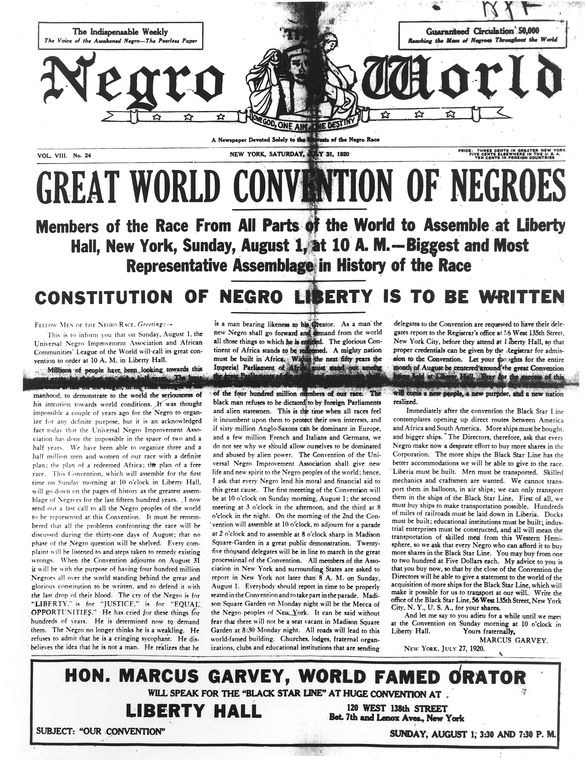
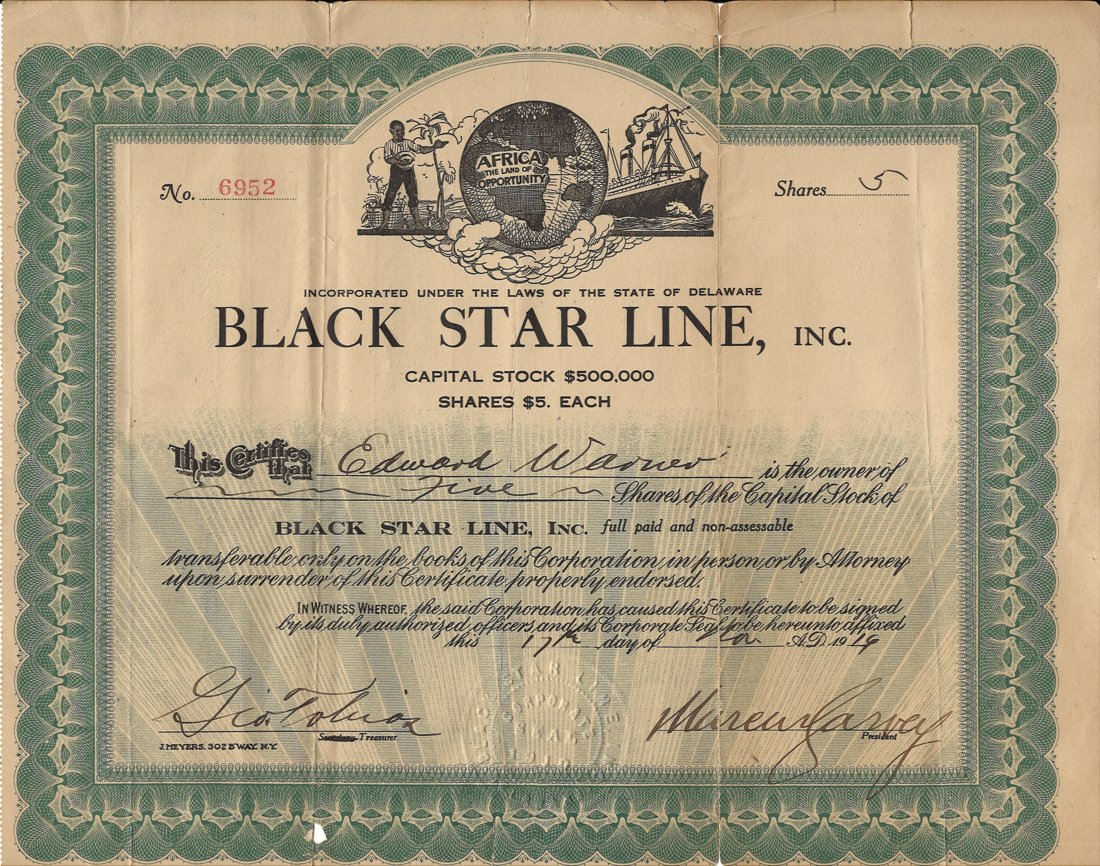
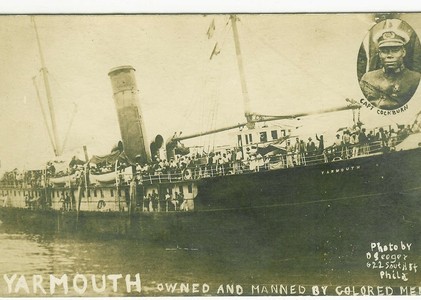
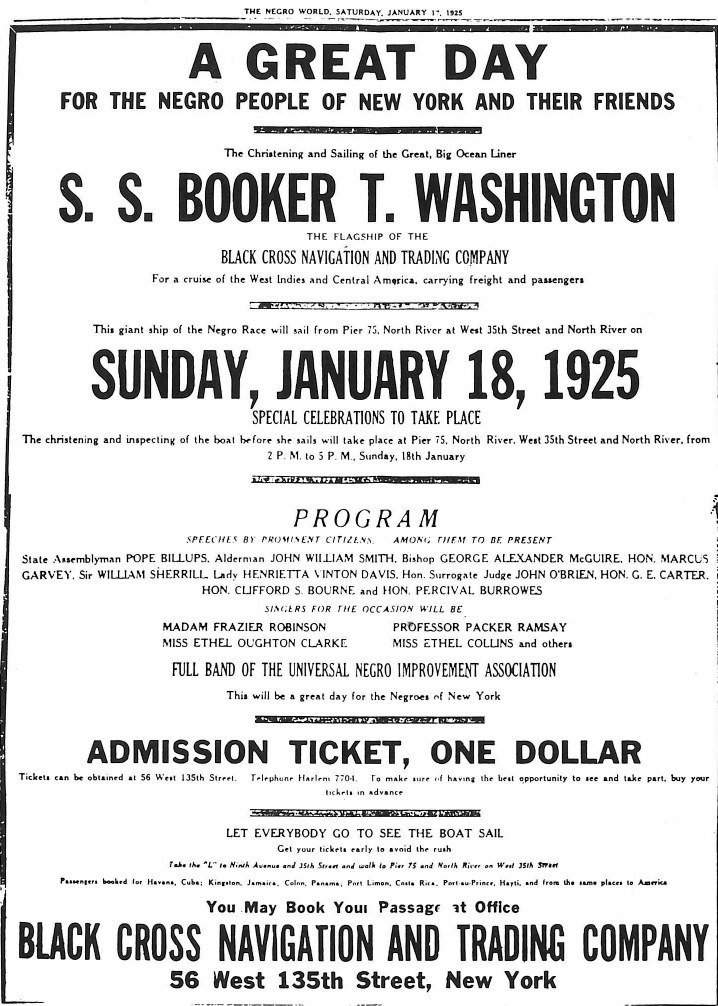
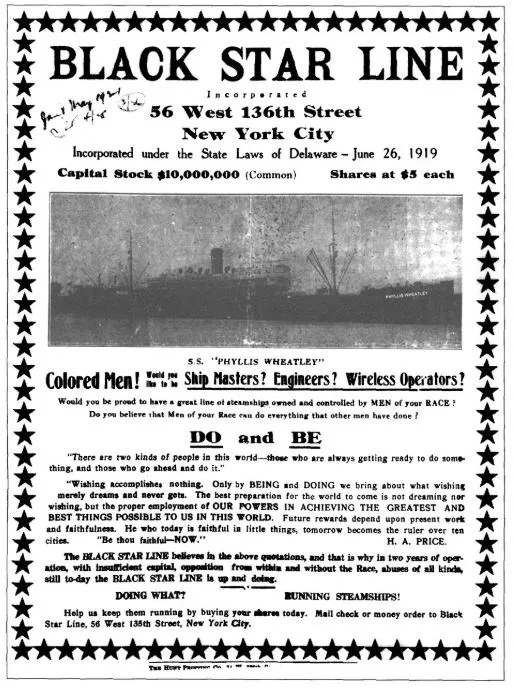
Every gold mote is a share. Warner certificate No. 6952 (Wikimedia Commons, photo Rblack131, CC BY-SA 4.0) · Yarmouth postcard, photo D. Seeger (Wikimedia Commons) · Negro World, 31 July 1920 (NYPL Schomburg, public domain) · Booker T. Washington ad, Negro World, 17 Jan 1925, reproduced in Watson, Steamboat Bill p. 271 · Phyllis Wheatley brochure, 1921. Negro Factories Corporation list: secondary summaries, to check against Hill, ed., Garvey Papers. The circle is our drawing of the plan.
Every voyage, traced by date
Ports and dates: Milton H. Watson, “Black Star Line,” Steamboat Bill, pp. 264–72. Where Watson names a country but not a port, the line runs to the country. Coastlines: Natural Earth (public domain). Courses are drawn port to port, not plotted from logbooks.
What the money was, in today’s dollars
Full bar = $240,000; the striped bar runs off the page (≈ $20 million today). Figures: Watson, pp. 265–72. Today’s dollars: U.S. consumer price index, 1920 to 2025, about 16×, rounded.
Three what-ifs. Move the dials.
Arithmetic on the documented numbers, not forecasts and not history. Each dial starts where the record says things really stood.
Fill the Yarmouth
First voyage, Nov 1919: 23 passengers. Room for 50. Fares $60 (Cuba) to $80 (Colón).
Fill the Booker T. Washington
Jan 1925 cruise: 70 first-class berths at $350–400 round trip, 100 second class. She sailed with 14 passengers.
Keep the dollars circling
$757,150 from shares. The plan: spend it at UNIA stores, pay it out as wages, spend it there again. How many times does each dollar change hands?